
Energy Transition Accelerates as Emerging Economies Take the Lead
Record additions of solar and wind capacity in the developing world are reshaping global power markets and the investment case for clean energy.
Amara Okafor8 min read

Author
Global Trade Editor
Amara Okafor covers international trade, logistics and emerging-market supply chains. She has reported from ports, industrial zones and trade summits across four continents.
Record additions of solar and wind capacity in the developing world are reshaping global power markets and the investment case for clean energy.
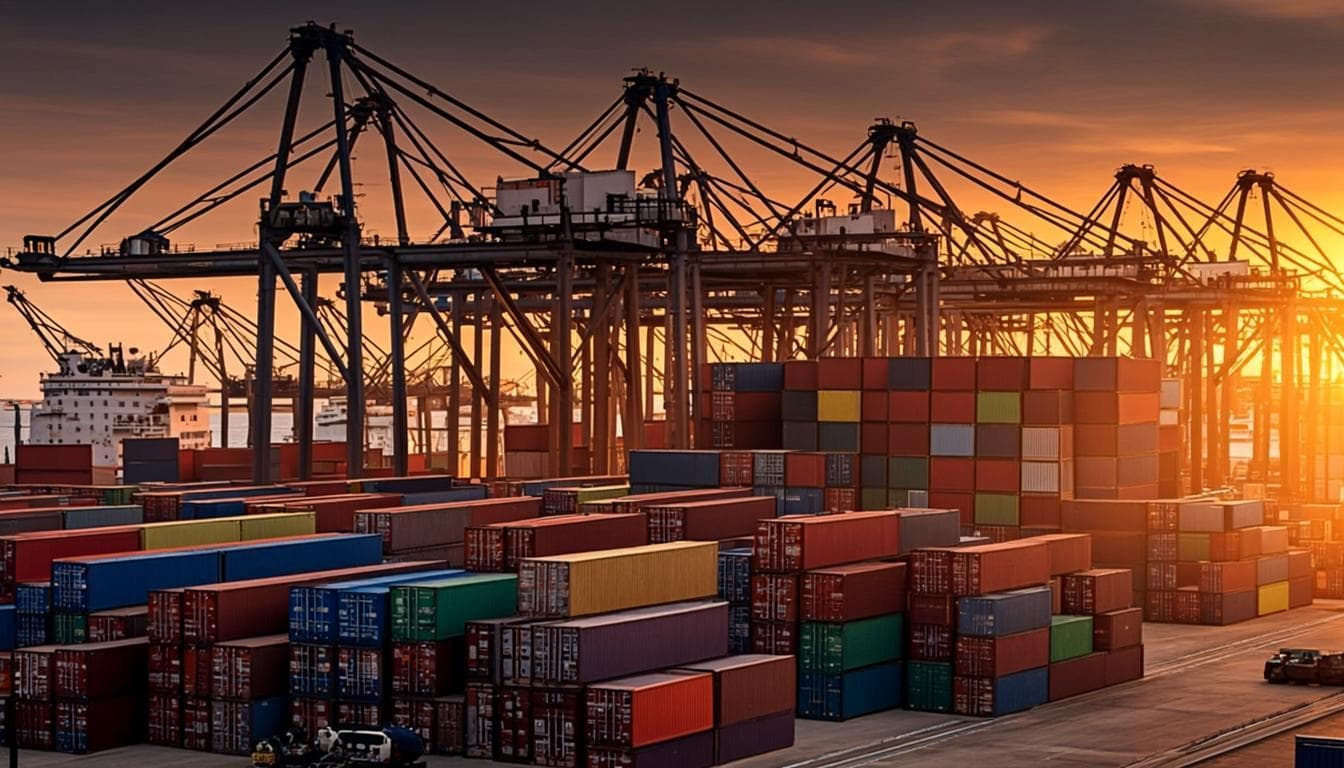
Maritime chokepoints like the Suez Canal and Strait of Hormuz serve as critical arteries for global commerce, with disruptions creating ripple effects that can last for months.

Digital transformation at customs is creating substantial savings for businesses through streamlined processes and reduced paperwork, though the full potential remains largely untapped.
The global logistics landscape is experiencing a dramatic divergence, with air cargo experiencing strong growth while ocean shipping stabilizes after pandemic disruptions.

Businesses are accumulating unprecedented cash reserves amid economic uncertainty, raising questions about future investment and growth.

The stability of a company often hinges on its leadership transition strategy, yet many investors overlook this critical governance factor until it's too late.
A detailed analysis of how enterprises are allocating their artificial intelligence investments across software, talent, infrastructure, and change management initiatives.

Family businesses demonstrate remarkable resilience and performance in emerging economies, leveraging their unique advantages of long-term vision and stable leadership.
Semiconductors have evolved from mere components to critical geopolitical assets, driving nations to prioritize domestic production capabilities and technological sovereignty.
Edge computing represents a fundamental shift in how data is processed, moving computation closer to the source to reduce latency and enable new real-time applications across industries.
The rise of artificial intelligence is fundamentally reshaping how software companies charge for their products, moving beyond traditional seat-based models toward more dynamic pricing structures.
Businesses face critical decisions between open-source and proprietary AI models, weighing costs, control, and implementation complexity.