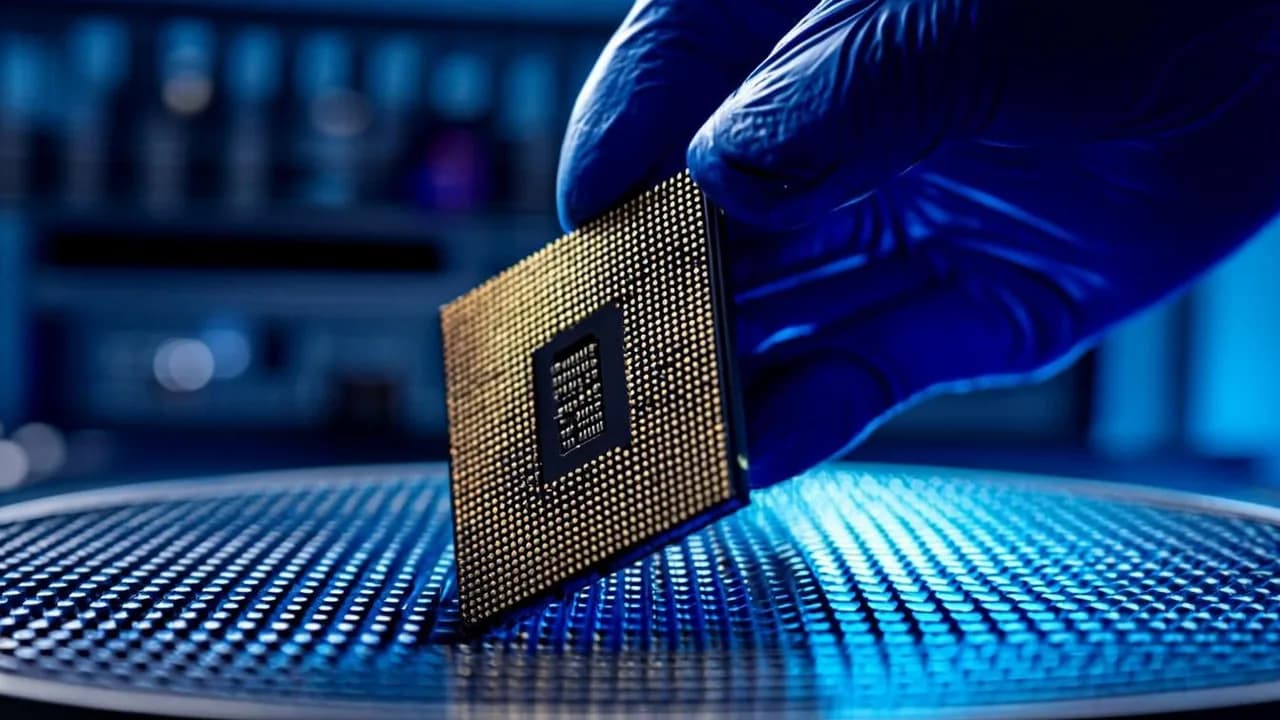
AMD Reports Tonight: The AI Chip Trade's Next Test
AMD reports Q3 after the close Tuesday with analysts modeling $13.1 billion of revenue, up 42%, and EPS of $1.93-$1.95. The stock is down 11% into the print.
James Whitfield8 min read
Enterprise tech, AI adoption, semiconductors and digital business.
18 Articles
AMD reports Q3 after the close Tuesday with analysts modeling $13.1 billion of revenue, up 42%, and EPS of $1.93-$1.95. The stock is down 11% into the print.
Five hyperscalers have committed $800.6 billion to AI spending in 2027. After Friday's $1 trillion tech wipeout, investors want to know who pays for it.
Meta is in talks to spend billions on Google TPUs — the report that knocked Nvidia down 2.2% and cracked open the question of AI chip pricing power.

AI chip export controls entered a new phase in 2026. This guide explains the licensing regime, who is affected, and what compliance teams should do before year-end.

The semiconductor industry's unified optimism has fractured as AI executives publicly call for a pause, triggering a market selloff that raises questions about valuations and industry momentum.
European courts uphold a €4.1 billion fine against Google for Android antitrust violations, while the FTC reportedly advances a broad probe into Microsoft, signaling renewed global scrutiny of Big Tech.
Medicare is testing AI-run prior authorization to target wasteful medical spending, and the result was immediate: a large drop in services, per MarketWatch. The experiment could define AI's role across regulated industries.
Nvidia chief executive Jensen Huang has been caught up in a reported Chinese spy probe, per Investing.com, and AI stocks slid on the news — a jolt that pushes the chip war from commerce into personal and legal territory.
Companies are shifting artificial intelligence from pilot projects into production systems, focusing on measurable productivity and cost discipline.
Organizations are transitioning from experimental AI initiatives to deploying artificial intelligence as core business drivers, requiring new strategies and organizational structures.
Semiconductors have evolved from mere components to critical geopolitical assets, driving nations to prioritize domestic production capabilities and technological sovereignty.
Artificial intelligence promises transformative benefits, but many organizations fail to account for the full spectrum of expenses involved in AI implementation and maintenance.