
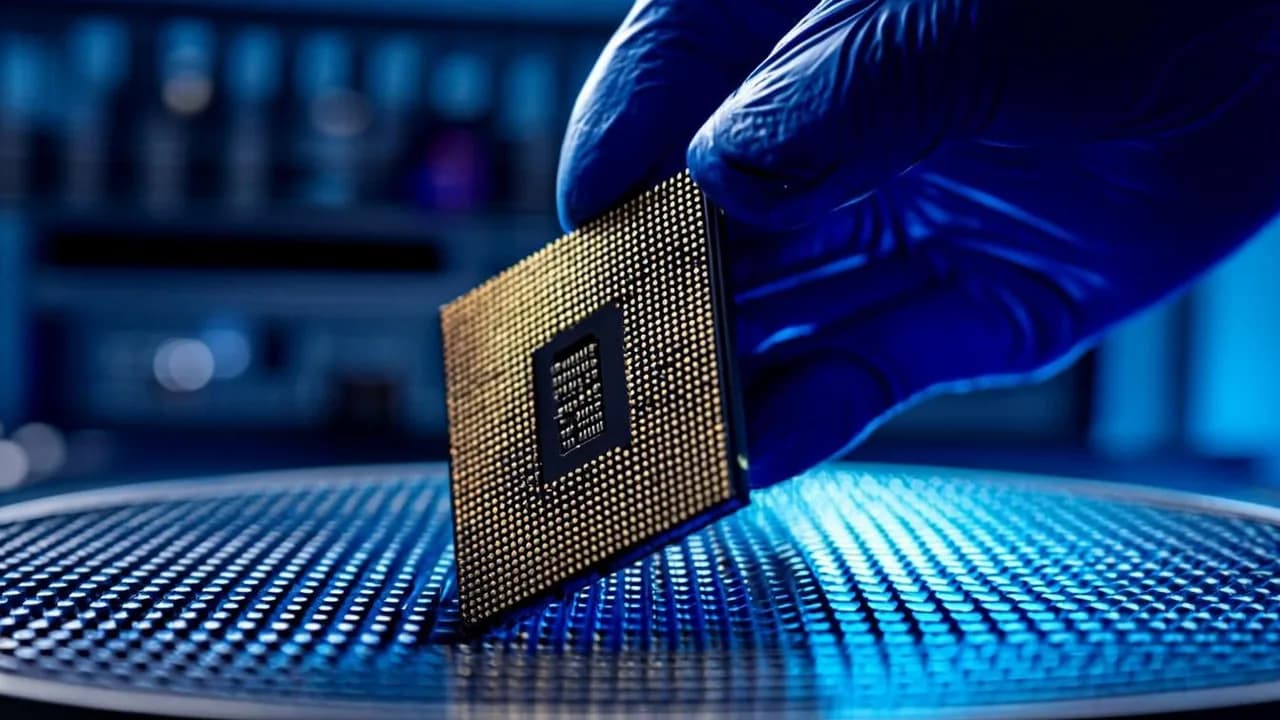
The semiconductor industry's carefully constructed narrative of unending growth has fractured, triggering a broad selloff among chip stocks after prominent AI industry leaders publicly called for a pause in investment. According to Fast Company, executives from several major AI firms have expressed rare caution about the pace of spending, creating an unusual split within an industry that has long projected unified optimism. This divergence has fed into a year-long debate about whether the sector is in a bubble, with AMD, Nvidia, Intel, and Sandisk leading the decline, while Micron also slumped significantly. The market reaction underscores how insider sentiment can quickly reshape investor psychology in technology sectors that rely heavily on future expectations.
The pause calls mark a significant departure from the industry's typical messaging, which has consistently emphasized exponential growth and transformative potential. This shift has created uncertainty about the demand trajectory for AI chips and related technologies, particularly as companies face mounting pressure to demonstrate returns on massive investments. The selloff has been particularly acute among companies with direct exposure to AI computing, though memory chip manufacturers have also been affected as investors reassess the broader semiconductor demand outlook.
What makes the episode notable is the source of the shock: it came from inside the industry itself. When the companies spending the money on AI infrastructure start asking aloud whether the pace is sustainable, investors wonder what those insiders can see that outside analysts cannot.
Key Takeaways
- Semiconductor stocks sold off broadly after prominent AI executives publicly called for a pause in investment, with AMD, Nvidia, Intel, and Sandisk leading the decline and Micron also slumping.
- The impact was disproportionate to any immediate fundamental change: much of the drop reflects a reassessment of long-term growth assumptions rather than current sales.
- Different segments absorbed the pressure unevenly—logic chipmakers fell hardest, memory somewhat less, equipment in between—each pricing a different point in the capex chain.
- The sector's growing weight in major indices means its sentiment swings now transmit directly to broad market performance.
Market Reaction to Insider Caution
The semiconductor selloff accelerated as news of the pause calls spread through trading desks, with investors interpreting the comments as a potential early warning signal. According to market analysts, this type of insider caution can be particularly impactful in sectors like semiconductors, where future expectations drive a significant portion of valuation. The reaction has been disproportionate to any immediate fundamental change, suggesting much of the decline reflects a reassessment of longer-term growth assumptions rather than current sales figures.
The mechanism is worth spelling out. Semiconductors trade on the expectation of earnings years into the future, so valuation depends on narrative rather than observable data. That structure is stable while the narrative is unanimous, and fragile the moment a credible voice inside it breaks ranks—insiders are presumed to know the order book. Once unanimity breaks, the market reprices downward until a new consensus forms.
Valuation Comparisons with Past Cycles
Current semiconductor valuations are drawing comparisons to previous market cycles, particularly the dot-com boom and bust. Analysts note that while the fundamentals supporting AI chip demand are stronger than those of many internet-era companies, the pace of appreciation has created valuation metrics that are vulnerable to sentiment shifts. Historical precedents suggest that periods of rapid valuation expansion often end with corrections when growth fails to meet elevated expectations, though the unique characteristics of AI adoption may alter this pattern.
The comparison cuts both ways. The bearish reading stresses the endpoint: valuations that price perfection are hostage to any evidence of imperfection, and the pause calls were exactly that. The favorable reading stresses the substance: the leading AI-era chip companies generate very large, real profits on current shipments, unlike many internet-era leaders. The risk is not that the businesses are fictional but that the multiples leave no room for a single disappointment.
Memory vs Logic vs Equipment Exposure
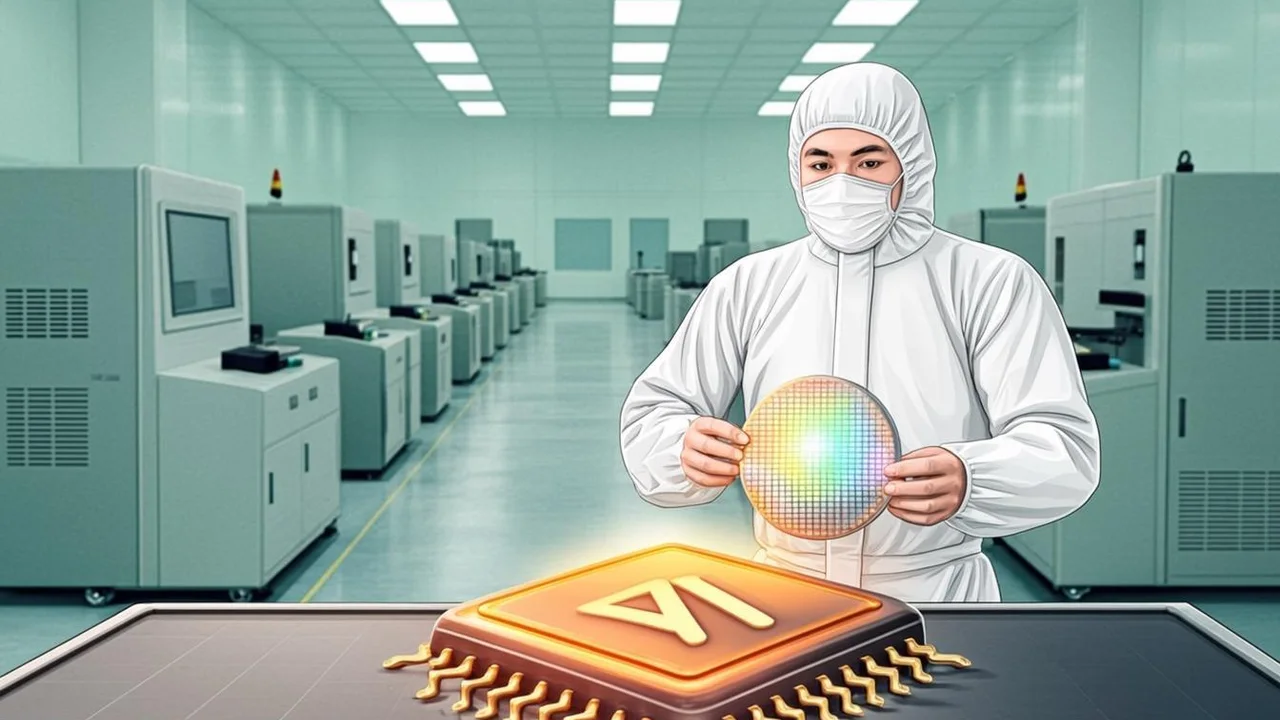
The selloff has affected different segments in varying ways. Logic chip manufacturers, which produce the AI accelerators driving much of the sector's growth, have experienced the most significant declines. Memory chip manufacturers, while also down, have seen somewhat less severe pressure, possibly reflecting different demand profiles and inventory cycles. Equipment manufacturers have fallen somewhere in between, with investors weighing potential delays against the long-term need for advanced manufacturing capabilities.
The pattern is informative because each segment prices a different point in the capex chain. Logic makers are the most direct bet on AI compute demand, so they moved hardest. Memory sits one step removed, its pricing cycles giving some insulation at the cost of slower transmission of any recovery. Equipment makers sell into capacity rather than demand: a build-out paused is usually rescheduled, not canceled, so their reaction reflects uncertainty about timing more than scale. How the three groups trade relative to one another will tell analysts whether the pause is a delay or a turning point.
Index Concentration Risk
The semiconductor sector's increasing concentration in major indices has amplified the reaction to the pause calls. As we covered in a recent analysis on supply chain realignment, the industry has become a critical component of global technology infrastructure, with its largest companies representing significant portions of major indices. This concentration means sentiment shifts in the sector can have outsized effects on broader market performance, creating systemic risks that weren't as pronounced in previous technology cycles.
The arithmetic is unforgiving. When a handful of companies carry a meaningful share of an index, a sector-specific repricing mechanically moves the whole market, and passive investors cannot escape the effect because the exposure repeats in every index fund. That is why the pause calls moved the entire market, and why the resolution of the semiconductor debate will matter far beyond the sector itself.
Correction vs Regime Change
Market participants are debating whether the current selloff represents a temporary correction within a longer-term bull market or the beginning of a more fundamental regime change. Those who view it as a correction point to strong underlying demand for AI computing and the limited alternatives for investors seeking exposure to this growth trend. Those who see a regime change highlight the potential for multiple expansion to reverse as growth expectations moderate, particularly if the pause calls become more widespread.
The distinction is not academic. Under the correction reading, weakness is an entry opportunity. Under the regime-change reading, the capex peak is in or near, and the sector's next leg will be driven by consolidation rather than expansion. The evidence that could discriminate includes equipment order books, the pace of enterprise AI adoption, and whether other AI leaders echo the pause calls or distance themselves from them.
What to Watch
The geopolitical landscape adds another layer of complexity: as we've reported on critical minerals and trade policy, the industry operates in an increasingly politicized environment, with export controls and supply chain restrictions affecting market dynamics. Within that context, investors should watch for follow-up commentary from the executives who initiated the pause discussions, as continued caution could prolong the selloff; track earnings reports for signs of demand softening; observe how institutional investors position themselves; and pay attention to enterprise AI adoption, as companies move from experiments to core operations as we've previously covered, which could clarify the pace of deployment versus the rhetoric.
FAQ
Why did insider comments move chip stocks so much?
Because semiconductor valuations rest on a shared narrative about future demand. When executives inside the industry break that unanimity, the market loses its pricing anchor and reprices downward until a new consensus forms.
Is the AI chip sector in a bubble like the dot-com era?
The comparison is contested. Skeptics point to valuation levels reminiscent of that era; defenders note that today's leading chip companies earn substantial real profits on current sales, unlike many internet-era leaders.
Do the pause calls mean AI demand is weakening?
Not directly. A call to pause investment is a statement about the pace of spending, not about orders already placed. Its significance is as a signal: insiders are the best-informed observers of the order book.
How exposed is the broad market to this selloff?
Materially. Semiconductors now represent a significant share of major indices, so a sector-wide repricing moves benchmarks mechanically. This concentration effect means the sector's debate is now the market's debate.
The Bottom Line
The semiconductor selloff is best understood as a repricing of assumptions, not a deterioration of the business. Shipments have not collapsed; customers have not canceled. What changed is that a group of people positioned to know the most about AI infrastructure spending—executive ranks inside the AI industry itself—publicly urged a pause, and the market interpreted that as information about the shape of the demand curve it had been extrapolating.
Whether the markdown proves prudent depends on evidence that does not yet exist. If enterprise AI adoption keeps migrating toward core operations and equipment order books hold, the pause calls will read as a healthy airing of caution, and the correction will have offered an entry point. If the caution spreads, the regime-change camp will have been right that the capex peak was nearer than priced. Investors do not need to resolve that question today; they need to respect it—watching the follow-through from executives and the relative behavior of logic, memory, and equipment stocks.


Comments(0)
Share your thoughts. Comments are moderated and links are not allowed.
No comments yet. Be the first to share your view.
Add a comment