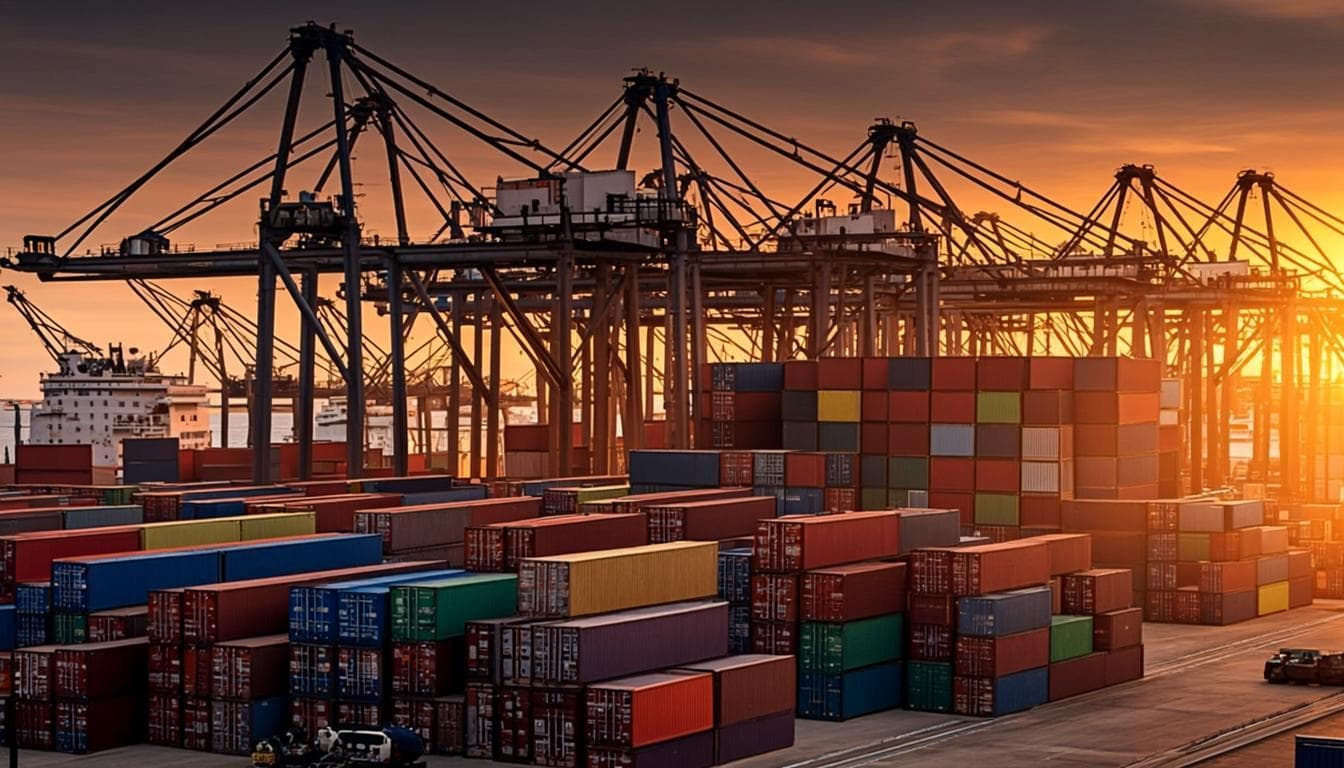
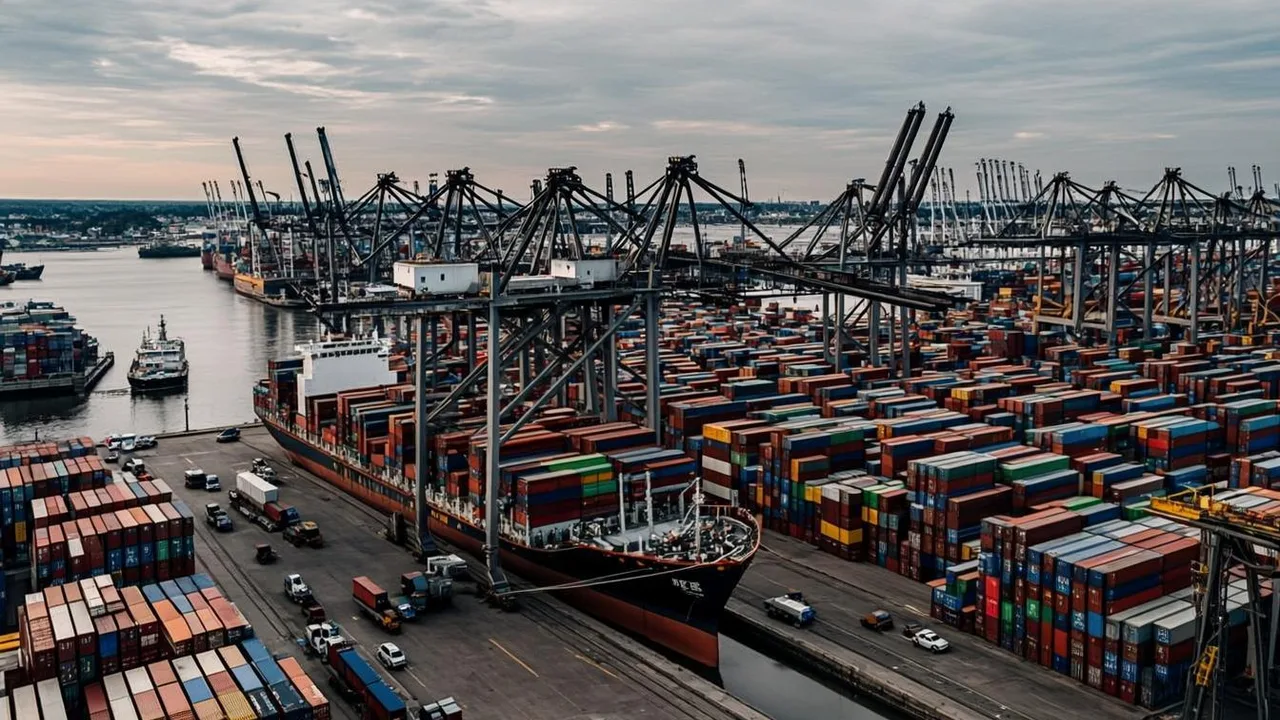
Walk through a modern air cargo terminal in Hong Kong, Frankfurt, or Memphis at two in the morning and the divergence in global logistics is visible in the cargo itself: e-commerce parcels stacked in containers, semiconductor shipments moving under tight security, pharmaceuticals in temperature-controlled units. Meanwhile, at the nearby container port, vessels depart on schedule at rates that bear no resemblance to the panic pricing of a few years ago. Two modes of freight, two entirely different markets.
The global logistics landscape is experiencing a dramatic divergence, with air cargo enjoying strong growth while ocean shipping stabilizes after the pandemic-era disruptions. The split reflects changing priorities in global trade, where speed and reliability are increasingly valued over cost alone. Understanding why these trends point in opposite directions — and when each mode deserves the business — has become a core strategic skill.
Key Takeaways
- Air cargo demand is growing strongly, driven by e-commerce volumes and time-critical industrial shipments, while ocean shipping has normalized with spot rates far below their 2021–2022 peaks.
- The economics favor air when product value is high and product life is short: premium freight spend can be cheaper than inventory carrying costs and lost sales.
- Air capacity remains structurally constrained — limited belly space and a finite freighter fleet — keeping rates elevated versus historical norms even after moderation from pandemic peaks.
- Shippers increasingly run hybrid strategies, moving urgent and high-value goods by air and everything else by sea; that balance is the key competitive variable for 2026–2027.
The Economics of Speed
The air-versus-ocean choice was never really about transportation cost. Moving a kilogram by air costs a multiple of what ocean transport charges — desks routinely cite ten to fifteen times more. On that comparison, ocean wins every time. But transportation cost is only one component of total landed cost, and for high-value goods it is often the smallest one.
The fuller calculation includes inventory carrying costs, obsolescence risk, capital tied up in transit, and the commercial cost of being late. A container of upholstered furniture can spend five weeks at sea without consequence. A shipment of smartphones cannot: every day in transit is a day of missed sales, and a late arrival in a launch window can poison a season. Analysts note that as supply chains slimmed down inventories after the pandemic, the arithmetic tilted further toward air for anything valuable, perishable, or fashionable.
E-commerce Rewrites the Demand Curve
The e-commerce boom has fundamentally reshaped air freight demand, and the effect is structural rather than cyclical. Online retail runs on promises — two-day delivery, next-day delivery — that can only be kept by moving goods long distances quickly. High-value consumer goods, fashion, cosmetics, and electronics increasingly travel by air in both directions of the journey: from Asian factories to Western fulfillment centers, and cross-border directly to consumers as parcels.
Retailers have grown more willing to pay premium rates for air cargo because the alternative is costlier. Stockouts destroy customer loyalty and push shoppers to competitors; overstocking to avoid them ties up capital and ends in markdowns. Air freight, in this logic, is not a transportation expense but a working-capital tool. Market watchers describe the change as permanent: as global online shopping continues its upward trajectory, baseline demand for air cargo ratchets up with it.
Semiconductors and the Cost of Standing Still
The semiconductor industry has become another pillar of air freight growth, for a stark reason: a production line stopped for want of a chip loses money faster than almost any logistics premium. Chips are extraordinarily valuable per kilogram — ideal freight economics — and time-sensitive, since ongoing component shortages force manufacturers to take supply wherever it appears.
That urgency has made air transport the default mode for critical components, with companies prioritizing speed over cost almost without calculation. Analysts note the behavior extends beyond chips to any industry where a missing part halts assembly: automotive plants learned during the chip shortage that an idle line is the most expensive logistics outcome of all. The shortage has since eased in some segments, but the premium placed on certainty persists among procurement teams.
The Capacity Squeeze
Demand alone does not explain elevated air freight rates; the supply side does. Air cargo capacity remains constrained despite growing demand. A large share of global air freight travels in the bellies of passenger aircraft, so capacity follows passenger routes rather than cargo demand. When passenger networks shift, cargo capacity moves with them, whatever shippers want. Dedicated freighter fleets, meanwhile, are finite and expensive to expand, with long order books for new aircraft.
The imbalance has kept air freight rates elevated compared with historical norms, though they have moderated from pandemic peaks. Constraints are sharpest on the trade lanes connecting Asia with North America and Europe, precisely where e-commerce and semiconductor demand is strongest. Shippers have responded with block-space agreements and long-term contracts, trading flexibility for certainty — a shift analysts read as the market pricing reliability as a product in its own right.
Ocean Shipping Returns to Normalcy
Ocean shipping tells the opposite story. After the extreme disruptions of the pandemic era — port congestion, schedule chaos, and spot rates that made front-page news — container shipping has largely normalized. Spot rates have fallen dramatically from their 2021–2022 peaks as congestion eased and vessel schedules stabilized. Predictable ocean timelines have allowed shippers to revert to sea transport for less urgent goods, restoring the traditional division of labor between modes.
Yet the normalization is not a return to 2019. Structural changes persist: many businesses now hold larger buffer inventories, dual-source suppliers, and treat reliability as a purchasing criterion alongside price. Carrier alliances continue to manage capacity actively, and full order books for new vessels keep the supply side loose, which market watchers say limits carriers' pricing power near term. For shippers, ocean freight is once again the affordable default — but a default now chosen deliberately, not by habit.
The Modal Shift and the Road to 2027
The net effect of these forces is a notable modal shift: high-value, time-sensitive cargo migrating from ocean to air, while commodity flows stay at sea. The shift reflects a broader reevaluation of supply chain strategy, with businesses weighing resilience and responsiveness against pure cost efficiency. It is most visible in industries with tight production schedules or short product lifecycles, where weeks of transit time are simply incompatible with the product.
Looking ahead to 2026–2027, the divergence should persist. Air cargo's demand drivers — e-commerce, semiconductors, premium pharma — remain intact, while capacity additions arrive slowly. Ocean shipping should stay competitive on price, with occasional regional disruptions. The winners will be shippers who treat mode selection as a portfolio decision, matching each product line to the transport economics it deserves.
FAQ
Why is air freight growing while ocean shipping stagnates?
Because their demand drivers have diverged. Air cargo serves goods where speed is worth a premium — e-commerce parcels, semiconductors, pharmaceuticals — and that demand keeps rising. Ocean shipping serves bulk and containerized goods where cost dominates, and that market has normalized after the pandemic, with ample capacity and rates well below their peaks. The modes are not competing for the same cargo.
Is air freight more expensive than ocean shipping?
Much more, per kilogram — commonly an order of magnitude more. But the relevant comparison is total landed cost. For high-value, time-sensitive, or short-lifecycle products, the cost of slow transport (inventory, obsolescence, lost sales) can exceed the freight premium. For bulky, low-value goods, ocean remains overwhelmingly cheaper, which is why most world trade by volume still moves by sea.
What is belly cargo, and why does it matter?
Belly cargo is freight carried in the holds of passenger aircraft. It matters because a large share of global air freight capacity is a byproduct of passenger flying: when passenger routes are cut or reshaped, cargo capacity disappears regardless of freight demand. This coupling keeps air cargo rates volatile and explains why freighter operators and long-term charters matter for shippers needing guaranteed space.
Will ocean rates stay low through 2026–2027?
No one can promise that, but the setup favors shippers: vessel order books are full, fleets are younger, and demand growth is moderate. That said, ocean markets have repeatedly shown how quickly a single event — a canal closure, a port disruption, a rerouting around a conflict zone — can tighten capacity and spike rates. Analysts advise locking in contract rates where possible while keeping contingency routings in mind.
The Bottom Line
The freight market has split into two economies. In one, speed is the product: air cargo thrives because e-commerce, semiconductors, and modern inventory practice make time the scarcest resource. In the other, cost is king: ocean shipping has normalized into affordability and predictability, doing what it has always done best at prices shippers can accept. Both trends are real; they are the same supply chain, optimized at different speeds.
For businesses, the practical takeaway is to stop treating freight as a single procurement category. Segment products by value density, urgency, and lifecycle; assign each to the mode whose economics fit; and revisit the split as rates and capacity move. Companies that manage this balance deliberately through 2026–2027 will spend less and deliver more reliably than those that treat transportation as an afterthought.



Comments(0)
Share your thoughts. Comments are moderated and links are not allowed.
No comments yet. Be the first to share your view.
Add a comment