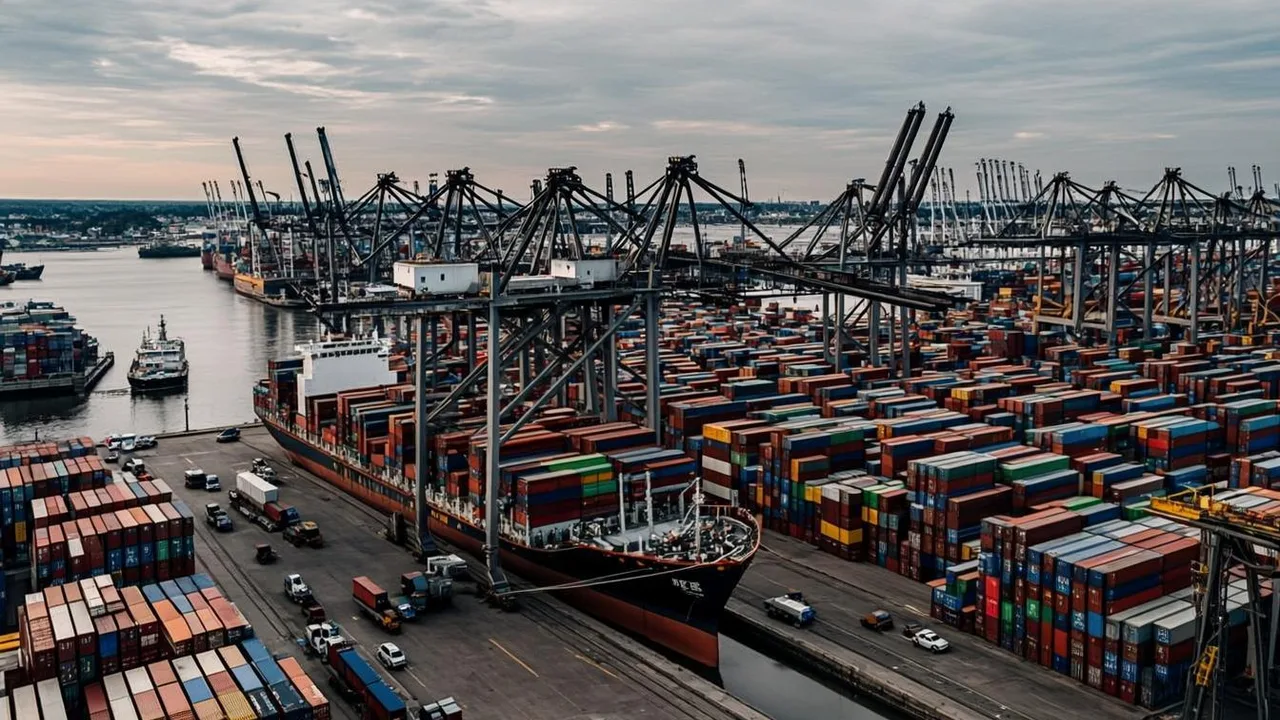
Tariffs are on the ballot tonight, but a change of hands in Congress would not lift them. Reuters reported on Nov 1 that Democratic wins would shift Congress' trade debate yet fall short of actual US tariff rollbacks, with symbolic tariff votes likely if Democrats take at least one chamber. For importers building 2027 sourcing plans, the realistic picture of tariffs after the midterms is a change in oversight, not a change in law — louder hearings, more votes that fail, and a White House that keeps the pen.
That distinction matters commercially. Duties assessed under the main tariff authorities flow through importers' landed costs today, and nothing on Tuesday's ballot automatically refunds them. What an election can change is the political weather around those duties — and, over time, the negotiating leverage behind the two files that matter most this autumn: the US-Canada track and the China truce.
What a new Congress could actually do on tariffs after the midterms
Start with the powers Congress genuinely holds. The House and Senate write tax and trade legislation, approve trade agreements, and control the committees that summon administration officials to testify. A Democratic chamber would use those tools immediately: expect votes to curtail or condition specific tariff actions, oversight hearings featuring importers and manufacturers testifying about costs, and a steady stream of requests for the paperwork behind each duty determination.
Reuters' analysis frames these as symbolic in effect — majority votes that command headlines but lack the two-thirds margins needed to override a presidential veto. The realistic near-term product of a flipped chamber is documentation and political pressure, not repeal. For companies, that translates into a different kind of planning problem: congressional scrutiny creates headlines that move supplier negotiations even when it does not move the tariff schedule.
The useful discipline is to separate signal from statute. A symbolic vote tells you where the political center of gravity is moving; it does not change your duty rate on any given entry. Importers who treat oversight as a leading indicator — and adjust supplier terms, hedging and pricing assumptions gradually — will be better positioned than those who wait for legislation that may never clear a veto.
The hearings themselves are not empty theater, either. Oversight records built during a divided Congress — testimony, subpoenas, agency correspondence — become the raw material for future legislative pushes and for the negotiating positions both parties carry into 2028. For importers, committee records are often the earliest public signal of which tariff programs have durable political support and which are exposed.
Why Section 232 and 301 stay with the White House
The structural reason for restraint is delegated authority. The heavy duties in the current regime rest on statutes — Section 232 on national-security grounds and Section 301 on unfair-trade grounds — that Congress wrote decades ago precisely so the executive could act quickly and broadly. Those authorities sit with the president, and they remain with the president whether the House flips, the Senate flips, or both. Congress can amend the underlying statutes, but that requires legislation crossing the president's desk, which a simple chamber majority cannot deliver.
This is why Reuters' reporting describes Democratic wins as shifting the debate rather than the duties. The administration can also negotiate around Congress entirely, as the ongoing files demonstrate: tariff reductions arrive as the outcome of executive agreements — with Canada, with China — rather than as acts of legislation. The practical corollary for importers is unwelcome but clarifying: your duty exposure is a function of White House diplomacy and agency determinations, so your scenario planning should track negotiations, not election maps.
The Canada concept deal — and the Aug 18 déjà vu
The most active file is the northern one. President Trump floated a concept of a US-Canada deal — including a pipeline element — after his Nov 1 call with Prime Minister Mark Carney, per Reuters and the Detroit News. Carney said US and Canadian teams will work on the trade deal in coming weeks, citing constructive discussions, according to Politico. For two economies that exchange autos, steel, aluminum and energy at enormous scale, even a framework conversation moves procurement decisions.
Veteran watchers of this file will hear an echo, though. The Globe and Mail noted on Nov 3 that resumed talks rewind the clock to Aug 18, when a US-Canada deal was announced subject to finalization of documents — and collapsed three days later. Announcements in this relationship have historically run ahead of signed documents, and pipeline politics adds a domestic dimension on both sides that trade negotiators alone cannot settle. We are tracking the state of play in the US-Canada deal taking shape.
The pipeline element is the detail that changes the negotiation's shape. Energy infrastructure ties the trade file to North American energy security — a frame in which both capitals have domestic constituencies to satisfy, and one where a deal can be packaged as infrastructure policy and trade policy at once. Whether that makes agreement easier or harder is the open question; what it does do is raise the stakes of every announcement, and the standard for treating announcements as deals.

Michigan: where tariff costs meet the ballot box
If you want to see why tariffs became an election issue at all, look at the industrial Midwest. The New York Times reported on Nov 2 that Trump's tariffs are a midterm flashpoint in Michigan, where businesses and consumers are contending with higher costs. The state's economics make the connection unavoidable: automakers and their supplier networks import components across the Canadian border multiple times before a vehicle is finished, so each duty compounds through the bill of materials in a way a single shipment never reveals.
The politics and the arithmetic point the same way. A tariff is a tax collected at the border and absorbed somewhere in the chain — by importers, by manufacturers, or by households at the checkout. When the absorbing happens in factory towns, it becomes a voting issue; when it becomes a voting issue, both parties have an incentive to talk about lowering costs, even if their mechanisms differ. Cost pass-through is the mechanism voters feel directly. Duties on imported components raise production costs before a finished good reaches a lot; duties on consumer goods raise shelf prices immediately. Michigan's mix of manufacturing and cross-border commerce means both channels register in the same county, which is why tariff politics there is less about ideology than about invoice lines.
That is the underlying force behind the symbolic votes Reuters predicts, and it is why the tariff debate will not end tonight regardless of who wins.
What stays on the calendar regardless of tonight's result
Three clocks keep running through the election. The first is China: the truce that paused the steepest Section 301 rates was extended, and importers should treat the China tariff truce extension as the deadline that matters most, because it decides whether holiday-season replenishment pricing holds into January.
The second is freight. Duty costs are only half of landed cost, and the rate environment matters just as much to a 2027 budget; our Q4 shipping cost outlook for importers lays out what carriers and capacity are doing to contract rates. You can follow both files, and the wider tariff landscape, in our trade section. The third is the Canada negotiation itself, which could produce either a signed agreement or a second Aug 18-style collapse within weeks — and either outcome would move duty rates on steel, aluminum and autos faster than any act of Congress.
What this means for you
If you import, budget on continuity and plan on volatility. The base case after tonight is the same tariff schedule with a more aggressive oversight calendar, so model 2027 landed costs on current duty rates before you model any rollback. The scenarios are asymmetric, too: an oversight-heavy year costs management attention, while a rollback priced in too early costs real margin when it fails to arrive. Keep exclusion requests, refund documentation and tariff-classification files audit-ready — a Congress that cannot legislate can still investigate, and clean paperwork is the cheapest protection available.
Watch the two executive files, not the chamber scoreboards. The Canada talks could deliver real duty relief on autos, steel and aluminum within weeks — or collapse again on documentation, as the Aug 18 episode showed. The China truce sets your pricing runway for the first quarter. Both move on White House diplomacy, and both can move faster than any symbolic vote.
Finally, use the politics as intelligence. If Democrats take a chamber and the tariff votes begin, the roll calls will show you exactly which districts and which industries have the votes to make cost relief durable — a map of where the next real negotiation starts. Importers who read the oversight record through 2027 will see the direction of travel months before it appears in the Federal Register — and position their sourcing before the market does.




Comments(0)
Share your thoughts. Comments are moderated and links are not allowed.
No comments yet. Be the first to share your view.
Add a comment