
Recent economic data reveals a striking divergence in price trends across the economy. While prices for many goods have moderated significantly, services inflation remains stubbornly persistent. The split has created a complex challenge for central banks: traditional monetary policy tools appear to be having more impact on goods than on services, producing a core inflation rate that refuses to fall as quickly as policymakers might hope—even amid clear progress in some areas.
The divergence is not a statistical accident. Goods and services occupy different economic worlds, governed by different cost structures, competitive dynamics, and exposures to global trade. Goods are tradable, importable, and subject to global price competition; services are local, labor-intensive, and frequently shielded from the market discipline that disciplines product markets. When disinflation arrives, it travels through these two channels at very different speeds.
Understanding why services inflation resists the medicine is essential to judging when the inflation fight ends—and how policy, markets, and household budgets behave in the meantime. The answer runs through labor markets, housing measurement, and the structural features of service industries that make them the stubborn core of the inflation problem.
Key Takeaways
- Goods prices have moderated as supply chains normalized, but services—roughly the larger share of consumer spending—continue to drive core inflation.
- Services are labor-intensive and locally delivered, so their prices respond to wage growth rather than global competition.
- Tight labor markets have sustained wage-push pressure in hospitality, leisure, and other staffing-heavy sectors, feeding through to prices.
- Shelter inflation lags market rents by many months, meaning official figures have persistently overstated current housing-cost dynamics.
Goods Deflation: The Half-Won Victory
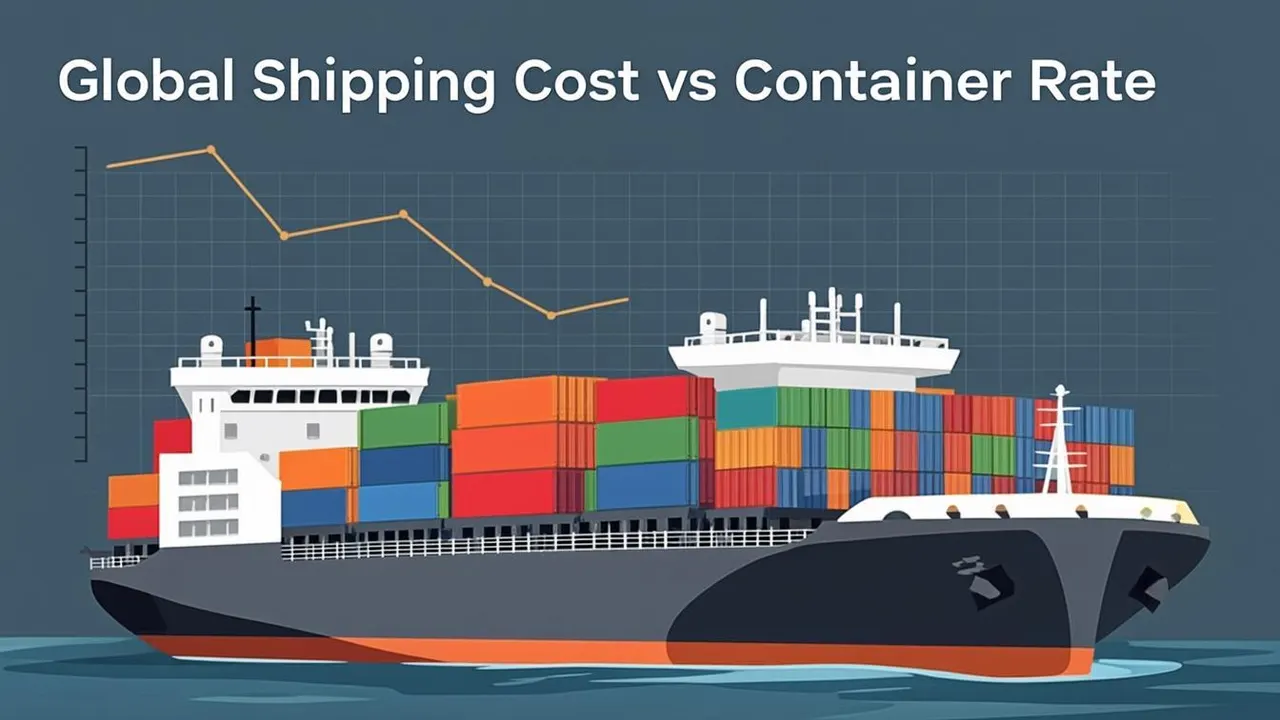
The cooling of goods prices represents genuine progress in the inflation fight. Supply chain disruptions that plagued the global economy have largely resolved, allowing production and distribution to normalize. Prices for furniture, electronics, apparel, and other goods have stabilized or declined as shipping costs fell from their pandemic-era peaks and inventories normalized. Consumers have benefited from these reductions, effectively receiving a raise through lower prices on many everyday purchases.
Yet the impact of goods deflation on headline and core readings has been limited, because goods represent a smaller portion of the consumer expenditure basket than services. The arithmetic is unforgiving: even sustained goods price declines translate into modest overall disinflation when services, with their larger weight, keep climbing. The easier part of disinflation—the reversal of supply shocks—delivers quickly; the harder part, services normalization, is inherently slower.
There is also a warning embedded in goods deflation. Analysts caution that goods prices can only fall so far before the disinflationary impulse from this channel is exhausted; the year-on-year arithmetic eventually becomes less favorable even if goods prices simply stay flat. The contribution of goods to overall disinflation is, in that sense, a wasting asset—which places the burden of the final mile squarely on services.
Services Inflation: The Persistent Driver
Services inflation has proven far more resistant to central bank tightening. Unlike goods, services are less affected by global supply chains and more dependent on local economic conditions—everything from healthcare and education to restaurant meals and transportation. Many services are labor-intensive and less subject to price competition, since a haircut in one city cannot be imported from another. That insulation from trade is precisely what makes service prices sticky: there is no global arbitrage to discipline them.
Market structure reinforces the pattern. Service industries often feature consolidated providers, high switching costs, and regulated pricing in sectors like insurance and utilities, all of which slow the pass-through of softer input costs to consumers. The result is a wedge: the same monetary medicine that rapidly cooled goods prices has only gradually worked through services, via the slower channel of demand moderation and labor-market cooling. Core inflation, dominated by services, therefore falls at a pace that frustrates policymakers even as individual components show clear improvement.
Wage-Push Dynamics in Services
One key driver of persistent services inflation is the strength of labor markets. With unemployment remaining low and job openings plentiful, workers have maintained significant bargaining power. Service businesses, facing difficulties finding and retaining staff, have passed higher labor costs onto consumers through price increases. The wage-price dynamic has become particularly entrenched in sectors like hospitality and leisure, where staffing costs represent a substantial portion of total expenses.
Economists sometimes describe services inflation as looking at itself in the mirror: because services are so labor-intensive, service price inflation raises the cost of living, which feeds wage demands, which raises service prices. Breaking that reflection requires either real wage growth underwritten by productivity gains—benign but slow—or a cooler labor market, which is where monetary policy enters. Analysts note that automation and administrative technology are being watched closely on exactly this dimension: a productivity lift in services would be the single most powerful benign force for the final mile of disinflation.
Shelter's Measurement Lags
The shelter component of inflation presents its own unique challenges. Housing costs make up a significant portion of the consumer price index, and they lag behind market realities by several months because official measures reflect all existing leases, not only new ones. Even as rental markets cool, official figures continue to record older, higher agreements—so shelter has contributed disproportionately to core readings even as private-sector rent trackers show softer conditions.
Owners' equivalent rent—the imputed measure used to capture homeownership costs—behaves similarly, with a lag tied to the slow turnover of tenancies rather than to market conditions. This is a measurement reality rather than a distortion anyone chose: statisticians face a genuine trade-off between capturing current market conditions and measuring the housing costs households actually pay.
The implication for policy is double-edged. On one hand, the lag means headline core readings overstate current housing pressure and will eventually catch up—embedded disinflation that policymakers can anticipate. On the other, waiting for the catch-up tests credibility, since the public experiences inflation through the published readings, not through the eventual reconciliation. Central banks have spent much of this cycle managing precisely that tension.
The Policy Problem and the Path Into 2027
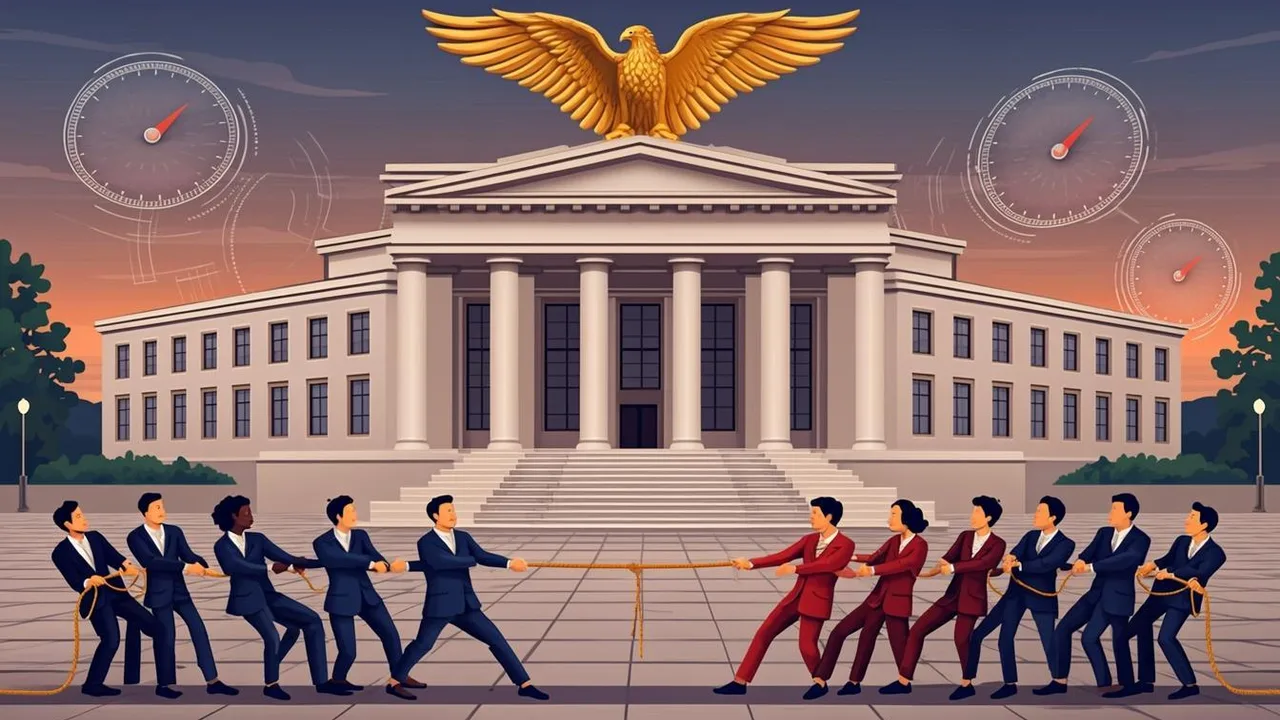
The goods-services wedge complicates the endgame. If goods prices are already flat or falling, further tightening does little more there; its remaining force lands on services, and thus on labor markets—raising the cost of the final mile in employment terms. Policymakers have therefore leaned increasingly on judgment, communication, and patience rather than mechanical rate paths.
The scenarios from here are distinct. In the benign case, shelter lags unwind, services inflation decelerates with gradually cooling labor markets, and core converges toward target without a growth sacrifice. In the stubborn case, wage-push dynamics persist, productivity gains stay elusive, and core plateaus above target, forcing uncomfortable choices between accepting an overshoot and engineering slower growth. In the adverse case, a commodity or trade shock reignites goods inflation while services remain elevated—the worst of both worlds for policy.
For households and businesses, the practical guidance is to plan for services costs—insurance, healthcare, education, dining—to remain firmer than goods prices even as the official aggregate approaches target. The divide between what is getting cheaper and what is not may prove the defining economic experience of this phase.
FAQ
Why are goods getting cheaper while services stay expensive?
Goods are tradable and exposed to global competition and normalized supply chains, so their prices respond quickly to easing pressure. Services are local and labor-intensive, so their prices depend on wages and domestic demand, which adjust much more slowly.
What is core inflation, and why does it matter?
Core inflation strips out volatile food and energy prices to reveal the underlying trend. Central banks focus on it because it is the best guide to where headline inflation is heading—and it is dominated by services and shelter, the stickiest components.
How does shelter inflation lag the housing market?
Official measures reflect rents on all existing leases, which turn over slowly, rather than only new lease prices. Private trackers of new rents have softened well before official shelter inflation, which follows with a delay of many months.
When will services inflation come down?
Economists expect gradual normalization as labor markets cool and shelter lags unwind, but the pace is uncertain and depends heavily on productivity growth. Analysts generally see services converging toward pre-pandemic norms slowly rather than abruptly.
The Bottom Line
The stickiness of core inflation is not a mystery but a mechanism. Goods disinflation arrived quickly because it could—the reversal of supply shocks and the restoration of global competition work fast. Services disinflation is slower because it must travel through wages, leases, and local market structures that monetary policy reaches only indirectly. The result is an economy where the visible prices of many purchases fall while the underlying inflation gauge remains stubbornly elevated.
For policymakers, the task is calibration: weighing how much of the remaining services stickiness is measurement lag that will resolve on its own, versus wage-push pressure that requires continued restraint. For everyone else, the practical reality is a two-speed economy—cheapening goods alongside firming services—that will shape budgets and business pricing power well into 2027. Progress is real; it is simply arriving at very different speeds across the economy, and the final mile belongs almost entirely to services.


Comments(0)
Share your thoughts. Comments are moderated and links are not allowed.
No comments yet. Be the first to share your view.
Add a comment