
America's inflation problem refused to fade quietly into the fourth quarter. The Bureau of Economic Analysis reported on October 29, 2026 that headline personal consumption expenditures prices — the Federal Reserve's broadest inflation gauge — rose 0.5 per cent on the month in September, an acceleration from August's 0.3 per cent rise. Year on year, headline PCE inflation ran at 3.6 per cent, matching forecasts, per Morningstar's October 29, 2026 report (Morningstar).
The core measure, which strips out food and energy and is the central bank's preferred gauge, rose 0.3 per cent monthly and 3.1 per cent annually — also in line with expectations. In an ordinary cycle that would count as a reassuring print. In this one it reads as confirmation that inflation has settled onto a plateau well above the 2 per cent objective, and that the Fed cannot yet declare victory.
The report landed a day after the Federal Reserve voted to hold its target range at 3.75–4.00 per cent on October 28, 2026 — a decision that followed a 25 basis point hike in September and came with two dissents in favour of moving higher. Taken together, the two days sketch an economy in which price pressure is persistent and a policy committee is visibly losing patience. The question that matters for households and markets alike is whether December's meeting has become a live hike risk. The evidence increasingly says yes.
The September Print, Line by Line
Start with the monthly momentum. Headline PCE rose 0.5 per cent in September against 0.3 per cent in August — a marked acceleration in the pace of price growth within a single month. Core PCE rose 0.3 per cent, a steadier reading, but the direction of travel in the headline number is what feeds wage negotiations and corporate pricing plans.
The annual comparisons tell the harder story. At 3.6 per cent headline and 3.1 per cent core, inflation is running more than a percentage point above target on both measures. That is not a spike; it is a floor. The September data matched expectations precisely — which is precisely the problem, because expectations have migrated higher.
The first warning came earlier in the month. The consumer price index, published on October 14, 2026, showed annual inflation of 3.7 per cent with a 0.6 per cent monthly jump driven by energy costs (CNBC). As we reported at the time, US inflation re-accelerates to 3.7% as energy costs climb. PCE and CPI are constructed differently, but they draw from the same underlying economy — and in September both pointed the same way.
A Fed Divided, and Unmoved
The Federal Reserve's October 28, 2026 decision to hold its target range at 3.75–4.00 per cent was less remarkable than how it was reached. Two FOMC policymakers dissented in favour of a rate hike — a pointed split, documented in the committee's own statement (Federal Reserve). The hold followed a 25 basis point increase in September, meaning the committee has tightened, paused and left the door open within the space of six weeks.
The implicit message is that the committee sees the inflation plateau but not yet the case for acting immediately. That is a delicate position. Holding after a hike is conventional; holding while two members openly favour tightening invites markets to price the dissenters' case rather than the majority's.
Every speech between now and the December meeting will be parsed for a simple signal: whether the majority is drifting toward the dissenters' view. Markets have learned to price the direction of travel, not the destination. For continuing coverage of prices, policy and the numbers in between, our Economy section will track each data point as it lands.
Dissents are the committee's only public currency of disagreement, and two at once is a signal worth reading carefully. A lone dissent often reflects a governor's framework; a pair, particularly when it argues for tighter policy with inflation above target, tells markets that the majority's patience is a choice rather than a consensus. History suggests such minorities either swell into a decision at the next meeting or fade quietly. December will reveal which.
Why December Is Live Again
The arithmetic of the September PCE report makes the December meeting genuinely live. Core inflation at 3.1 per cent gives the committee no running room: another month of 0.3 per cent core and 0.5 per cent headline prints would push the annual rates higher, not lower, by year-end. A committee that hiked in September and watched headline momentum accelerate in October will not want to spend 2027 explaining why it waited.
The consumer-financing channel makes the stakes concrete. Credit-card rates move quickly when the Fed tightens and slowly when it does not; our earlier analysis of how credit-card borrowers brace for a December hike sets out what another 25 basis points would mean for households who carry a balance from month to month.
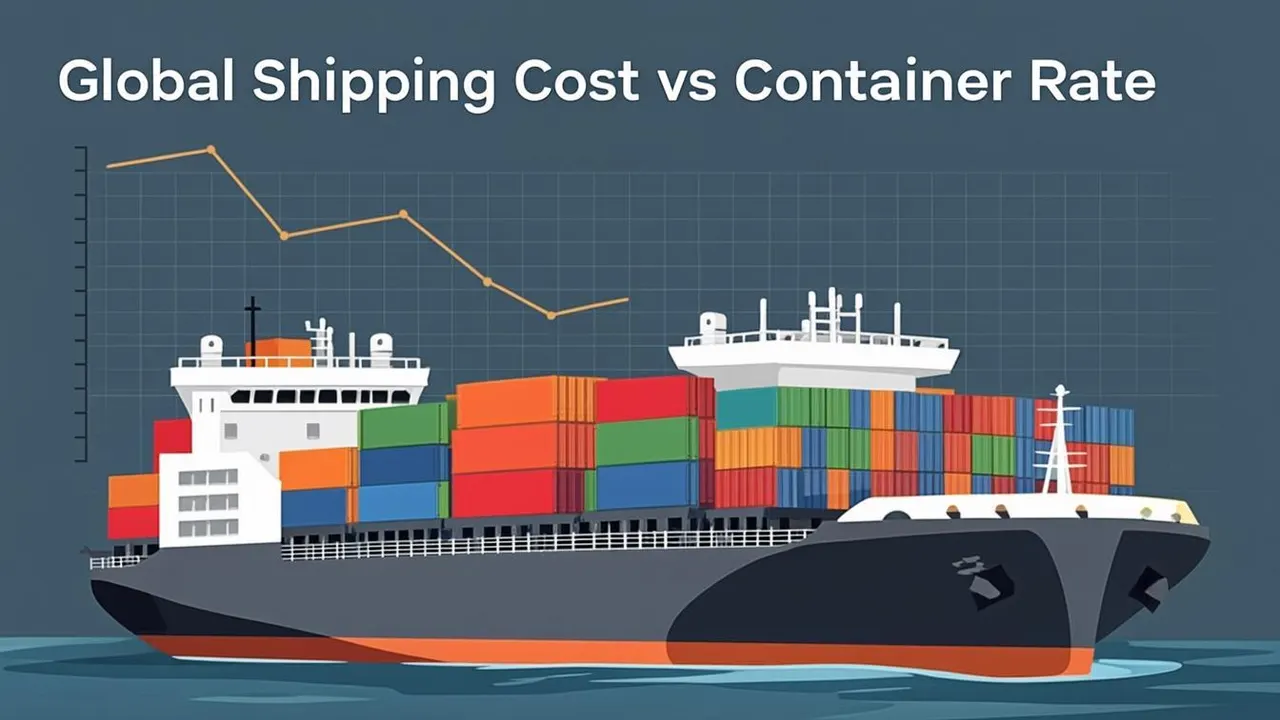
Businesses face the mirror image. Higher-for-longer rates raise the cost of inventory financing precisely when input prices are firming — and the freight leg of that equation is already turning, as our global shipping costs outlook for Q4 2026 details. Firms that cannot pass those costs through will watch margins compress; firms that can will feed the very price persistence the Fed is fighting.
The committee's conduct points the same way. Having lifted rates in September rather than waiting for the year's final meetings, it has already signalled a preference for acting while the door is open. A December move would not require new evidence of deterioration — only the absence of improvement. For a data-dependent committee, another month of firm headline and core readings would function as a hike ticket.
The Energy Problem in the Baseline
None of this arithmetic works without energy. The September CPI's 0.6 per cent monthly jump was driven by energy costs, and the same pressure flows into PCE with a lag through household bills and transport margins. Crude's move above $100 a barrel in late October 2026 keeps that channel open through the final two months of the year.
Energy is also the cruelest possible input for a divided central bank. It lifts headline inflation immediately — widening the gap the dissenters point to — while damping demand, the direction the majority would cite for patience. Europe's decision in late October 2026 to release 42 million barrels from strategic reserves acknowledges the same squeeze and offers only partial relief.
The timing compounds the difficulty. Energy costs reach consumers through utility tariffs, fuel prices and transport surcharges on schedules set by contracts rather than statistical agencies, so September's CPI jump will still be working through household bills as the December meeting approaches. That lag is precisely why committees that shrug off an energy spike often find themselves tightening after the spike has already done its damage.
For the Fed, the sequence matters more than any single print. CPI accelerated on October 14. The FOMC split on October 28. PCE confirmed the plateau on October 29. Each data point narrowed the committee's options for December, and each made the dissenters' argument easier to price.
What This Means for You
If you carry variable-rate debt — a credit card, an adjustable mortgage, a personal line of credit — treat December's meeting as a deadline for the decisions you control: paying down balances, fixing rates or refinancing while lenders still price a pause. Savers get the other side of the bargain: a hike, or even a hold, keeps money-market and certificate yields elevated, and there is little prize for locking in early. Homebuyers should expect mortgage pricing to stay jumpy around every inflation print, because markets now trade the dissenters' probability as closely as the committee's decision. And for anyone planning a 2027 budget, the working assumption should be that prices are rising near 3 per cent, not 2 — a difference that compounds on groceries, fuel and insurance alike. The Fed's December decision will not change that arithmetic quickly; your own planning can start now.




Comments(0)
Share your thoughts. Comments are moderated and links are not allowed.
No comments yet. Be the first to share your view.
Add a comment