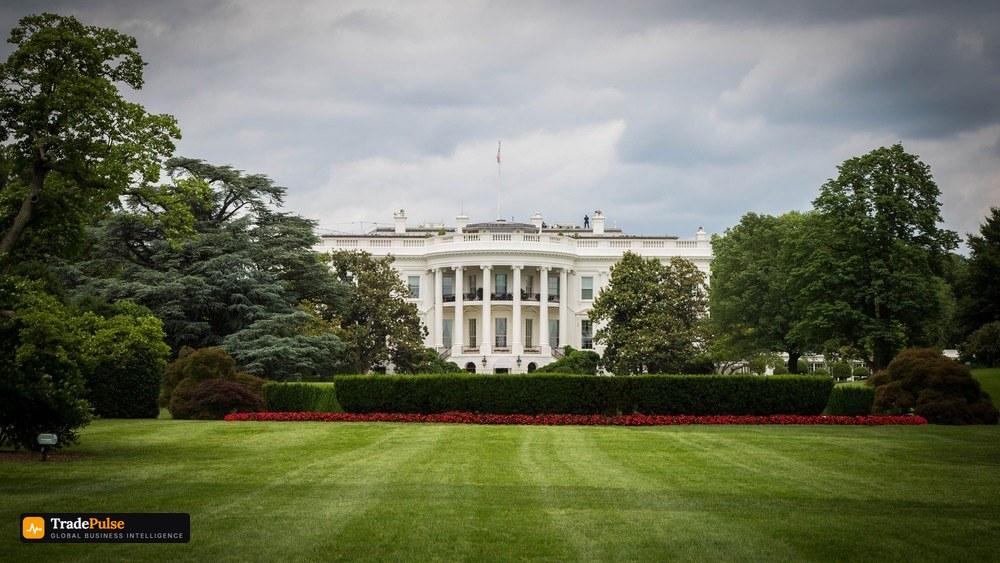
According to TradePulse, the Democratic sweep in the 2026 U.S. midterm elections will handcuff President Donald Trump's domestic legislative agenda but leaves the White House's grip on sanctions, diplomacy and key trade measures largely intact — a split that could raise, rather than lower, geopolitical uncertainty for global oil and gas markets. The outcome closely matches "Scenario C" of a pre-election outlook published on October 5: legislative gridlock at home, greater congressional influence over spending and appointments, and heavier reliance on executive powers to pursue policy abroad.
- Democrats now control Congress: 54 Senate seats to the Republicans' 44, with Alaska and Mississippi still uncalled, and a projected House majority of 251–268 seats.
- The White House keeps its core tools: sanctions implementation, diplomacy and certain trade measures, including tariff authority under the Sanctioning Russia and Iran Act.
- U.S. oil and gas output should stay tied to fundamentals, with LNG terminal approvals for the 2026–31 period standing and federal lease sales continuing under statute.
- First tests come fast: a December 11 funding deadline and the December 31 expiry of the Export-Import Bank charter fall to the lame-duck Congress before the new one convenes on January 3.
Democrats Take Both Chambers of Congress
Democrats flipped seven Senate seats — in Iowa, Kansas, Ohio, Maine, North Carolina, South Carolina and Texas — well beyond the net gain of four needed for control. The party now holds 54 seats to the Republicans' 44, with contests in Alaska and Mississippi uncalled as of November 6. Neither race can change control of the chamber.
In the House, Democrats are projected to hold between 251 and 268 seats once all votes are counted, though roughly 68 races had still not been called as of the November 4 tally. Five of the seven Senate flips came in states rated as toss-ups before the vote; the wins in North Carolina and South Carolina fell outside that list.
Gridlock at Home, an Executive Workaround Abroad
The veto remains the president's backstop. Overriding one requires 67 senators and 290 House members, and the projected Democratic majority — while larger than the narrow margin pre-election analyses assumed — remains well short of that threshold. History points the same way: over the last five presidencies, 81 of 84 vetoes came after the president's party lost a chamber, and Congresses seated after such a flip enacted an average of 391 public laws, against 514 for all others.
The new levers are money and people. Both chambers now control funding, and the Senate controls confirmations. That shift raises the political cost of further escalation against Iran, complicates potential concessions to Russia and invites tougher scrutiny of trade policy. Congressional constraints could also push the White House toward greater reliance on executive action — potentially increasing geopolitical uncertainty rather than reducing it.
Iran, Russia and China: Where Congress Can Bite
On Iran, both chambers can pass war-powers resolutions, but the veto still holds, so the practical leverage lies in withholding war funding and blocking confirmations. Democratic gains make post-election escalation costlier and a deal likelier.
On Russia, a Democratic Senate adds votes on Ukraine aid and the power to delay envoys and sanctions officials, which makes concessions pressed on Kyiv harder to sell. On China, Congress could try to write chip export licenses, rare-earth rules and outbound-investment rules into statute through the defense bill and Senate holds on trade nominees.
Venezuela's current output is safe under this configuration. Congress cannot revoke executive oil licenses, but both chambers can deny authority and funding for the Pentagon's 35% stake in the North American Blue Energy Partners concessions. If that happens, the expansion proceeds on private capital — more slowly, and without a federal backstop.
On tariffs, review bills would win a Senate vote but likely not the 60 votes needed to advance. Tariff authority under the Sanctioning Russia and Iran Act stays with the White House, and the Supreme Court has already established legal limits on the use of emergency economic powers to levy duties.
Domestic Oil and Gas: Direction Holds, Scrutiny Rises
U.S. oil and gas production should remain driven by market fundamentals, investment economics and infrastructure constraints, whichever party controls Congress. Approvals for liquefied natural gas (LNG) terminals covering the 2026–31 period stand. New approvals beyond 2031 could face more hearings and scrutiny, and slower confirmations at the Department of Energy and the Federal Energy Regulatory Commission could add friction.
On federal leasing, output follows price and capital discipline, and acreage is not a constraint. Democrats can now attach appropriations riders to the Interior Department's budget and influence confirmations of the officials who run lease sales. The sales themselves are statutory, however, and permits on existing leases continue.
For renewables, a Democratic Congress protects the surviving credits from further repeal and gains bargaining power over budget and debt-limit votes. Longer battery-storage credits are the most plausible gain, while restoring wind and solar credits remains out of reach. Nuclear, geothermal and critical minerals keep cross-party support and funding. Coal remains as backup capacity where grid operators require it, with storage and transmission support becoming tradable.
Lame-Duck Window Sets the First Test
The outgoing Congress keeps its authority until the new one convenes on January 3. It faces a December 11 funding deadline and the December 31 expiry of the Export-Import Bank charter. A lapse remains very unlikely. If lawmakers opt for a short renewal, though, the decision moves to the new Congress, where Democrats can add ethics rules and terms on default-rate exemptions.
For the Development Finance Corporation, friction rather than reversal is the base case, with conditions on the budget and the new $3 billion equity fund as the primary levers.
Governor Races Shape Data-Center Power Policy
Down-ballot results matter for power markets. 29 of the 36 governor races determined who appoints the chair of each state's public utility commission — bodies that set data-center tariffs, allocate grid costs between large users and households, and approve new plants and power lines. Democrats flipped five governorships, in Georgia, Iowa, Nevada, Ohio and Texas, and held Arizona, Maine, Michigan and Wisconsin.
Both candidates for Ohio governor had promised a pause on data centers until cost rules are in place, and regulators in Michigan and Wisconsin will set the 2027–28 siting and pricing policy. With Democrats now holding the Senate, a single federal cost-sharing rule for data centers becomes more likely — but siting stays with the states.
Why It Matters for Energy Markets
The midterms will not resolve the strains from the conflicts in the Middle East and Eastern Europe, or from transatlantic and U.S.–Canada trade tensions. They will, however, change the political environment in which Washington responds. Energy prices remain elevated, the U.S. remains deeply involved in the Middle East conflict, and Washington increasingly deploys sanctions, trade restrictions and energy resources as instruments of negotiation. With Congress empowered to squeeze funding and confirmations, the White House may lean harder on executive power abroad — the outcome that could matter most for crude, LNG and power markets.
The central question for 2027 is whether the new constraints encourage accommodation, produce prolonged paralysis, or drive the administration toward a more assertive use of executive power — each path carrying potentially significant consequences for global energy markets. The first evidence will come in the lame-duck fiscal decisions before January 3, followed by budget and debt-limit negotiations in 2027.
FAQ
Did Democrats win both chambers of Congress? Yes. They flipped seven Senate seats to reach 54 against the Republicans' 44, with Alaska and Mississippi still uncalled, and are projected to hold 251–268 House seats once all votes are counted.
Can the new Congress reverse the administration's energy and foreign policy? Not directly. Sanctions implementation, diplomacy and certain trade measures remain executive powers, and a veto override would require 67 senators and 290 House members. Congress's leverage lies in funding, confirmations and oversight.
What changes for U.S. oil and gas production? Little in the near term. Output should remain driven by market fundamentals, investment economics and infrastructure constraints, with LNG terminal approvals for 2026–31 standing and federal lease sales continuing under statute.


Comments(0)
Share your thoughts. Comments are moderated and links are not allowed.
No comments yet. Be the first to share your view.
Add a comment