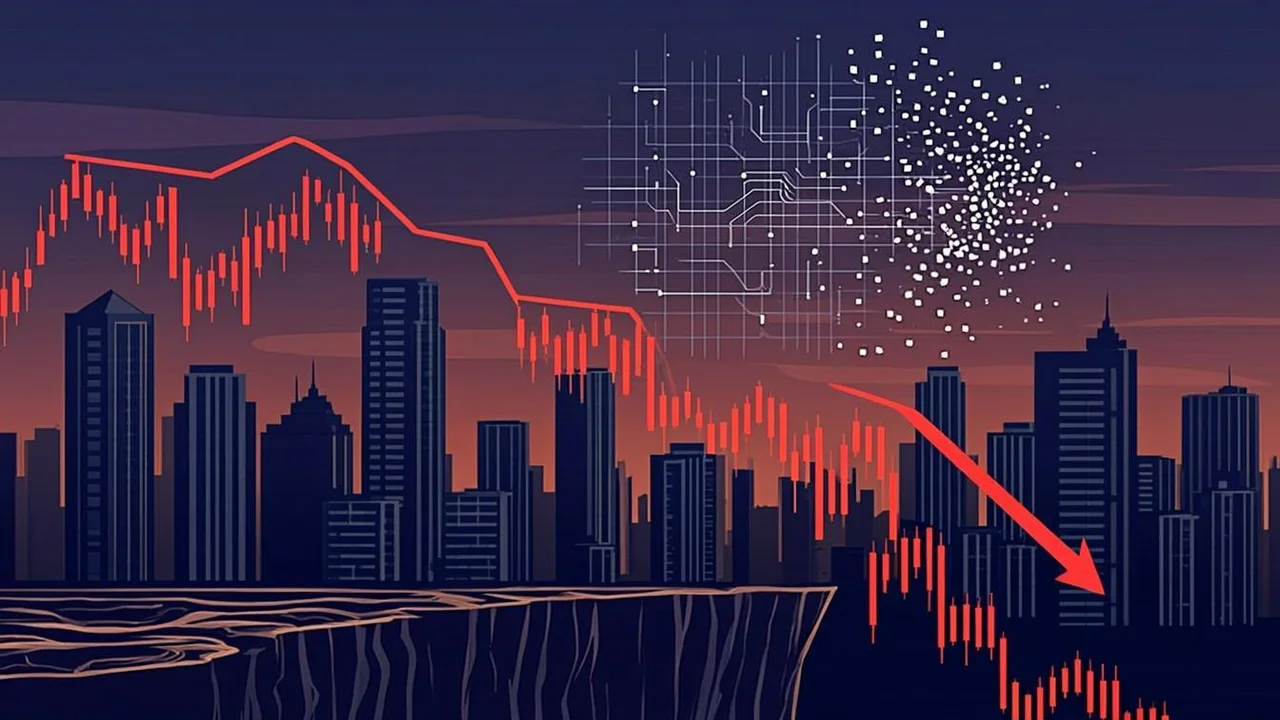
Wall Street Ends October With Worst Day Since June
The Nasdaq fell about 3% on October 30, 2026 — its worst day since June — as Amazon and Intel results deepened doubts about AI spending on Wall Street.
James Whitfield7 min read
23 results for “Federal Reserve”
The Nasdaq fell about 3% on October 30, 2026 — its worst day since June — as Amazon and Intel results deepened doubts about AI spending on Wall Street.

Amazon's commitment to heavy AI investments and Intel's cash burn warning trigger a broad market selloff, highlighting the growing tension between tech giants' capital expenditures and shareholder returns.

The latest CPI data shows inflation picking up again, complicating the Fed's path and squeezing household budgets.
After September's rate hike and with another increase projected for December, borrowing costs are set to keep climbing for Americans carrying card balances — and columnists now call balance-transfer cards the best weapon against rising debt.
The low-hire, low-fire economy just turned three — the strangest US job market on record, as MarketWatch reported. Here is what three years of frozen hiring mean for wages, careers, young workers and productivity.
The debate over the Federal Reserve's October rate pause is intensifying as market focus shifts to Treasury funding plans, where reduced long-term bond supply could boost demand and pull yields lower ahead of a projected December hike.
Declining logistics costs signal supply chain normalization, even as workforce challenges persist and freight costs shift across segments.
The FOMC meets October 28–29 with the fed funds rate at 3.50%–3.75% and futures pricing barely a 17% chance of a hike. Here is how each scenario plays out across stocks, gold and oil.
As stock markets remain near record highs, rising long-term bond yields suggest a divergence in economic outlook, with investors pricing in different futures for growth and inflation.
Equity benchmarks traded in tight ranges this week as investors balanced resilient corporate earnings against a still-cautious tone from major central banks.