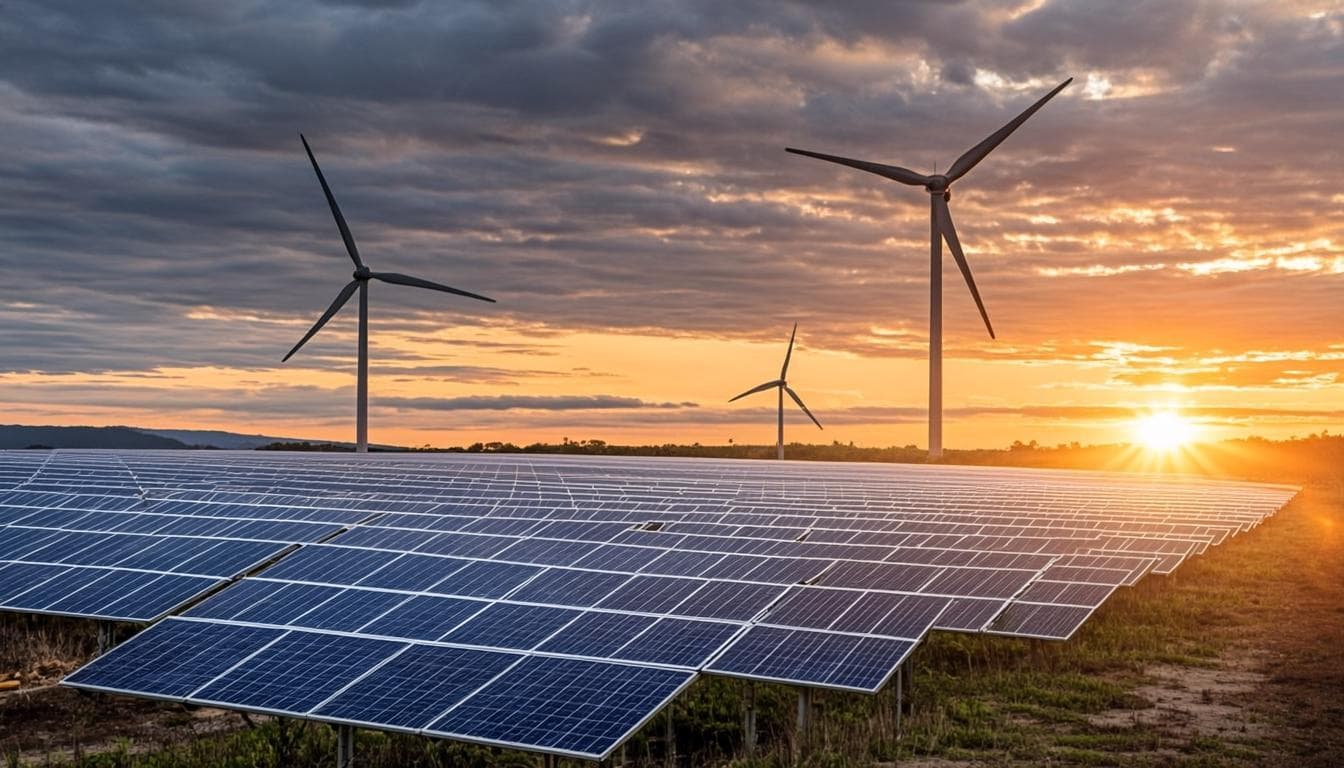
The global push toward decarbonization is driving unprecedented demand for lithium, copper and other critical minerals essential for batteries, electric vehicles and renewable energy infrastructure. But the mining industry faces significant challenges in scaling supply to match that demand, creating a potential bottleneck that could delay climate action and reshape global trade patterns.
The core of the problem is temporal. Climate policy is written in five- and ten-year targets; mines are built on fifteen-year timelines. Wind farms, grid upgrades and electric vehicle production lines can be approved and assembled in a fraction of the time it takes to find, permit, finance and commission a new copper pit or lithium brine operation. That mismatch — not technology — is emerging as the binding constraint on how fast the energy transition can actually run.
For mining companies, investors and policymakers, the stakes cut both ways: too little supply and the transition stalls; too much, too fast, and prices collapse, starving the very projects the transition needs next.
Key Takeaways
- New mines routinely take a decade or more from discovery to production — a timeline fundamentally misaligned with government climate deadlines.
- Lithium demand from electric vehicles could grow by several multiples in coming years, while copper remains indispensable for grids, wind turbines and solar installations.
- Processing and refining are as concentrated as mining itself — notably lithium processing in China and copper output in Chile and Peru — compounding supply security risks.
- Substitution, new battery chemistries and recycling will help, but all operate on timelines too slow to remove the bottleneck on their own.
Mining Runs on Decades; Climate Policy Runs on Deadlines
Developing new mines is a notoriously time-consuming process, often taking a decade or more from discovery to production — and industry veterans caution that the average for recent projects has drifted longer, not shorter. Exploration must find a deposit, feasibility studies must prove it economic, permits must be secured, financing must be arranged against cyclical prices — and only then does construction begin.
Permitting is the most visible chokepoint. Environmental review processes, community consultation requirements and legal challenges can add years to a project that is technically ready to build. In several major producing regions, proposed mines have spent longer awaiting approval than they would spend building them. Community opposition — often rooted in legitimate concerns about water use and local impact — adds complexity, particularly for lithium brine operations in arid regions and copper projects near farmland or indigenous land.
The result is a structural feature of the industry, not a temporary inefficiency: even record price signals cannot compress geology, bureaucracy and construction physics into the timelines climate targets assume. Analysts note that the pipeline of announced projects, on paper, often looks sufficient — but announced projects are not producing mines, and the attrition rate between announcement and first production is steep.
The Demand Surge Behind the Squeeze
The energy transition is creating massive new demand centers for these critical minerals. Electric vehicle manufacturing alone could increase lithium demand by several multiples in coming years, as each battery pack requires kilograms of lithium that no conventional vehicle needed. Grid-scale storage adds a parallel stream of demand that barely existed a decade ago.
Copper's case is broader still. The metal is indispensable for electricity transmission, wind turbines, solar panels and charging infrastructure — and electric vehicles use substantially more copper than combustion vehicles. Every scenario for decarbonization, analysts point out, is implicitly a scenario for expanded copper consumption: more wiring, more grid capacity, more generation equipment. Without adequate supplies of these materials, the world's ability to meet clean energy targets could be severely compromised.
The interplay between the two minerals matters for planning. Lithium markets have already demonstrated how violently sentiment can swing — from shortage panic to price collapse and back — as demand forecasts and new supply arrive out of sync. Copper, with its longer project lead times and deeper linkage to overall economic activity, tends to move more slowly but offers less escape: there is no large-scale substitute for copper in transmission, and the market has run on thin surplus margins for years.
Concentration Risk and the Geopolitics of Processing
The concentration of mineral resources in a few countries creates significant supply chain risks. A large portion of the world's lithium processing occurs in China, meaning that even lithium mined elsewhere often travels through Chinese refining before reaching battery factories. Copper mining is concentrated in Chile and Peru, where disruptions from labor action, water constraints or political shifts can ripple through global markets within weeks.
Concentration extends beyond geography into corporate structure: a small number of companies control a meaningful share of processing capacity for several transition minerals, giving pricing and allocation decisions outsized leverage. Governments have taken notice. Export restrictions, licensing requirements and state negotiation of mining terms have become more common, and trade tensions increasingly frame mineral policy on all sides.
The strategic response is visible in industrial policy: domestic mining incentives, processing plant construction outside traditional hubs, and strategic stockpiling. Analysts caution that building processing capacity is faster than building mines but still measured in years — and that policy enthusiasm often cools when prices fall, leaving projects stranded mid-cycle.
Substitution, Chemistry and the Limits of Innovation
In response to these challenges, companies are exploring alternatives to traditional mineral-intensive technologies. Battery chemistries that use less lithium — or different materials entirely — are in active development, and some have already reached commercial use in segments where energy density matters less than cost. Researchers are likewise working on copper-reduced designs for certain applications.
Innovation will matter, but honest accounting requires noting two constraints. First, substitution tends to shift demand rather than eliminate it — chemistries that avoid lithium typically lean on other minerals with their own supply chains. Second, vehicle platforms, grid standards and manufacturing lines are built around current specifications; re-engineering them takes years and heavy investment. Desks report that most industrial buyers treat alternative chemistries as portfolio diversification, not replacements.
Recycling: The Urban Mine Takes Time to Build
Recycling offers a promising avenue to supplement primary mineral supplies. As the first generation of electric vehicles and batteries reaches end-of-life, recycling programs could recover a substantial portion of critical materials — and unlike mining, recovered supply scales with past consumption rather than new permits.
But the timing is awkward. The vehicles being recycled today were built when EV volumes were small; the real recycling wave arrives in the 2030s, when today's record production retires. Meanwhile, establishing efficient recycling infrastructure presents its own challenges: collection logistics across dispersed vehicle fleets, complex separation processes for mixed battery chemistries, and economics that depend heavily on mineral prices. Analysts view recycling as essential to the medium-term picture — and unable to relieve the near-term squeeze.
What to Watch in 2026–2027
The coming years will likely see increased competition for mineral resources, potentially leading to trade disputes and resource nationalism. Watch three signals. First, prices: sustained lithium or copper price strength would accelerate project development and alternative adoption alike, while a price slide would quietly widen the future gap. Second, policy: mining incentives, permitting reform efforts and stockpiling announcements reveal how governments weigh supply security. Third, technology: commercial traction for lower-lithium chemistries and recycling capacity additions would gradually soften demand growth. The energy transition's success may depend as much on solving these mineral supply challenges as on technological innovation itself.
FAQ
Why can't mining simply scale up to meet demand?
Because mine development runs on decade-plus timelines spanning exploration, permitting, financing and construction — and permitting in particular has lengthened in many jurisdictions. Even urgent demand and high prices cannot compress these stages; they can only pull forward projects already in the pipeline.
Which minerals are the biggest concern?
Analysts most often cite lithium, where battery demand could grow several-fold, and copper, where no large-scale substitute exists for transmission and generation. Both face concentrated supply: lithium processing in China, copper mining in Chile and Peru.
Can recycling solve the shortage?
Only partially, and slowly. Meaningful volumes arrive when today's large EV fleets retire — mostly in the 2030s. Until then, collection logistics, separation processes and economics remain limiting, making recycling a medium-term supplement rather than a near-term fix.
Will new battery chemistries reduce demand?
They will diversify it. Chemistries using less or no lithium are progressing commercially, but they typically draw on other minerals, and re-engineering vehicles and factories takes years. Most industrial buyers treat them as one lane in a portfolio, not a replacement.
The Bottom Line
The energy transition's mineral bottleneck is a race between two clocks: the accelerating schedule of climate targets and the deliberate rhythm of mining development. On current evidence, the mining clock is slower — which means the transition's pace over the next decade will be set as much by pits, permits and processing plants as by panels and batteries.
For policymakers, the implication is that permitting reform, recycling support and diversified processing capacity are climate policy as much as generation subsidies. For investors, the imbalance between demand growth and supply lead times defines a multi-year theme in mining, processing and materials substitution — one that will be volatile, politicized and cyclical, but structurally supported. And for the industries that depend on these minerals, the practical task is hedging: diversifying sources, designing for material flexibility, and securing supply relationships before the squeeze, not during it.



Comments(0)
Share your thoughts. Comments are moderated and links are not allowed.
No comments yet. Be the first to share your view.
Add a comment