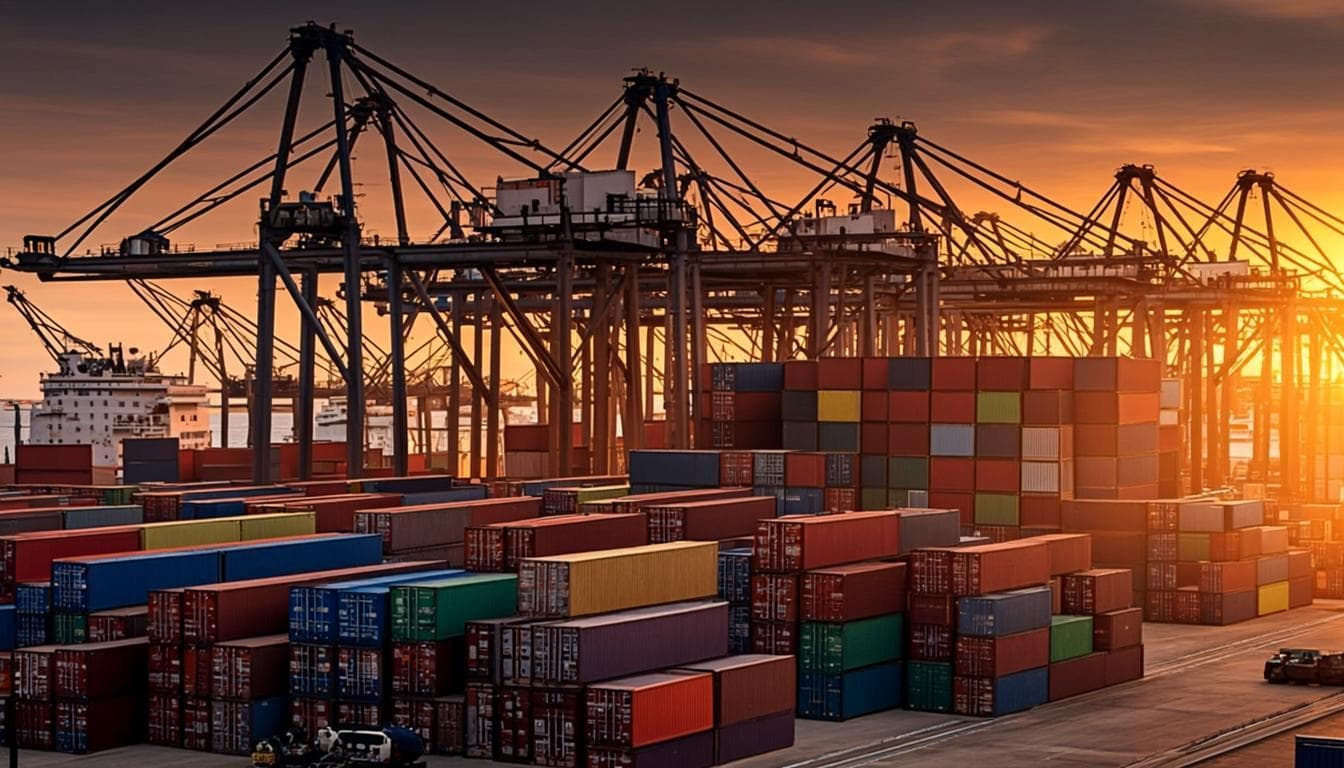
Tariff policy in 2026 comes down to a design choice: the blanket or the scalpel. Universal tariffs sweep across nearly everything a country imports, changing the price of thousands of product categories at once. Targeted tariffs zero in on specific products, countries, or sectors — anti-dumping duties on one grade of steel, punitive measures tied to one dispute. The distinction sounds technical, but it shapes what happens to consumer prices, supply chains, diplomatic relations, and the credibility of trade policy itself.
Both instruments share the same mechanism: a tax levied at the border, collected from the importer, and passed through the economy in ways that are endlessly debated and rarely simple. What differs is the blast radius — a universal tariff is a macroeconomic event, a targeted tariff usually a negotiation tactic. Confusing the two, analysts note, is among the most common errors in trade-policy debate.
This analysis separates the instruments cleanly: how each transmits costs, what each is strategically for, how retaliation dynamics differ, and why one is far harder to administer than it looks.
Key Takeaways
- Universal tariffs apply broadly across imports and act like a blanket tax, while targeted tariffs function as surgical instruments aimed at specific products, countries, or disputes.
- Price effects differ sharply: broad tariffs produce generalized price increases across consumption, whereas targeted measures concentrate costs on identifiable goods and supply chains.
- Retaliation risk is asymmetric — blanket tariffs invite comprehensive countermeasures and trade-war escalation, while targeted measures tend to draw measured responses.
- For 2026–2027, watch how governments oscillate between the approaches as domestic pressure for protection collides with the diplomatic and inflationary costs of broad measures.
The Anatomy of a Tariff
Start with what a tariff actually is: a charge collected at the border on imported goods. The legal importer pays it — not, as often assumed, the foreign exporter. What happens next is the real economics. The importer may absorb the cost in thinner margins, pass it to downstream buyers, negotiate a price concession from the exporter, or switch suppliers. Which path dominates depends on competition, contracts, currency movements, and how easily production can relocate.
The same headline rate can thus produce very different outcomes across products. Where domestic substitutes or diversified suppliers exist, tariffs redirect trade rather than raise prices much; where supply is concentrated and demand inelastic, the cost lands mostly on buyers. Exchange rates offset or amplify the effect — a weaker exporter currency can absorb part of the duty, a stronger one passes it through fully.
The design choice — universal or targeted — is therefore a choice about where these incidence mechanisms operate: everywhere at once, or in a chosen corridor.
Blanket or Scalpel: Two Philosophies of Protection
A universal tariff embodies macro logic: shift the terms of trade, shrink a deficit, raise revenue at scale, or signal protectionist intent across the whole economy. Because it covers nearly everything, it avoids awkward questions about who gets protected — nominally, everyone. The trade-off is that it also taxes the inputs domestic manufacturers need, raising costs for the very industries it claims to defend.
Targeted tariffs embody micro logic: address a defined problem — dumped products, subsidized competition, IP disputes, geopolitical pressure on a sector. Precision is the point, the measure calibrated to the injury, ideally with a documented investigation behind it. The trade-off is complexity and selectivity, creating winners and losers by administrative decision rather than market outcome.
History offers caution for both. Broad tariff walls preceded some of the darkest chapters in trade history — the spiral of the 1930s remains the standard tale — while targeted measures have long records of quiet success and quiet failure, depending on design. The post-war trading system was built on the belief that narrow, disciplined barriers embedded in rules beat undisciplined broad ones.
Who Actually Pays
The consumer story diverges sharply. Universal tariffs, touching thousands of categories at once, show up as generalized price increases — dispersed across everyday purchases, hard to attribute to any single policy, yet cumulatively meaningful for household budgets. Because the cost is everywhere, it is politically diffuse: no single industry visibly lobbies against it, and the inflation appears in statistics rather than on one shelf.
Targeted tariffs concentrate the burden. Prices rise for specific goods, and the affected parties are identifiable: importers of that product, manufacturers using it as an input, retailers selling it, foreign producers facing lost sales. That concentration is a feature as much as a bug — it allows precise calculation of who bears the cost, whether consumers, specific industries, or exporters forced to cut prices to keep market access.
A second-order effect often decides the political outcome: input tariffs. When a measure falls on industrial inputs rather than consumer goods, the visible consumer impact is small, but the cumulative cost to downstream industries can be substantial — generating lobbying from manufacturers on both sides of the same tariff line.
The Retaliation Game
Trade policy is a repeated game, and retaliation is the other player's move. Universal tariffs are the provocative opening: when nearly all of a partner's exports suddenly face barriers, its government faces overwhelming pressure to respond comprehensively — with plenty of targets to choose from. Such spirals escalate quickly, economists and market watchers note: each round of countermeasures widens the affected industries, hardens the politics, and makes de-escalation more expensive for both sides.
Targeted tariffs change the calculus. Because the damage is concentrated, the affected partner can respond in kind with proportionate measures, or absorb the hit and negotiate. A government facing duties on a handful of products has far less pressure to escalate than one facing a wall — which is why targeted measures have historically been more sustainable, leaving room for diplomacy, dispute settlement, and face-saving resolution.
The wildcard is linkage. In modern disputes, retaliation increasingly arrives in unexpected currencies — export controls on critical materials, regulatory scrutiny, procurement exclusions — so even a narrow tariff can trigger a broad conflict if the underlying relationship is strained.
The Bureaucracy Tax
The approaches also differ enormously in administration. Universal tariffs are, in a sense, simple: one rate schedule, few exceptions, minimal classification disputes, predictable rules, low compliance costs. That simplicity is a genuine attraction — though in practice even "universal" regimes accumulate exclusion lists as companies lobby for carve-outs, and the exceptions quietly grow into their own bureaucracy.
Targeted tariffs demand real machinery: detailed investigations to establish injury and causation, product classifications precise enough to separate covered from uncovered goods, rules of origin to determine where a product was actually made, and continuous monitoring to prevent evasion. Each requirement is a potential choke point — and a potential loophole.
Evasion is the persistent headache. Faced with duties, traders reroute shipments through third countries, make minimal modifications to reclassify products, or adjust sourcing to dodge the tariff's legal net. Authorities respond with documentation requirements and enforcement, raising compliance costs for honest importers — an arms race between rules and workarounds, market participants report, that consumes administrative resources and tests every supply-chain manager.
Scenarios for 2026–2027
Expect oscillation rather than a settled doctrine. Governments under domestic pressure will reach for broad protection, then manage the inflationary and diplomatic consequences by carving out exceptions, negotiating bilateral deals, or quietly narrowing the measures. Analysts anticipate a continued pattern of universal threats resolving into targeted implementations — the broad instrument as bargaining posture, the narrow one as the durable policy.
Watch three indicators: the pace of exclusion requests and how fast they are granted; the frequency and scope of retaliatory measures; and import-price data, which shows how much of the burden reaches consumers versus being absorbed elsewhere. Together they reveal whether a tariff strategy is working as designed.
FAQ
Do tariffs always raise consumer prices?
Not always, and not uniformly. Pass-through depends on competition, substitute suppliers, and exchange rates. On goods with easy alternatives, prices may barely move; on goods with concentrated supply, most of the tariff reaches the shelf.
Why would a government choose targeted over universal tariffs?
Precision. Targeted measures address a specific grievance — dumping, subsidies, IP disputes — with lower economy-wide costs, easier burden analysis, and much lower risk of comprehensive retaliation.
Can tariffs be avoided through transshipment?
Sometimes, which is why enforcement matters. Rerouting goods through third countries to disguise their origin is evasion, and customs authorities increasingly use documentation requirements and audits to catch it.
What turns tariff disputes into trade wars?
Escalation and breadth. When barriers cover most of a trading relationship and each side answers with wider countermeasures, retaliation becomes politically self-reinforcing and hard to unwind.
The Bottom Line
The universal-versus-targeted distinction is not academic. It determines whether a tariff behaves like an economy-wide tax with diffuse political consequences or a bargaining instrument with a concentrated blast radius. Broad tariffs maximize leverage and revenue ambition at the cost of generalized price increases, input-cost damage, and maximal retaliation risk. Targeted tariffs maximize control and sustainability at the cost of administrative complexity and constant evasion pressure.
For businesses, the practical implication is to model both: supply chains that assume today's narrow exemption may face tomorrow's broad wall, and vice versa. For policymakers, the lesson of both history and recent experience is that the instrument's design — its scope, its exclusions, its enforcement — often matters more than its headline rate.



Comments(0)
Share your thoughts. Comments are moderated and links are not allowed.
No comments yet. Be the first to share your view.
Add a comment