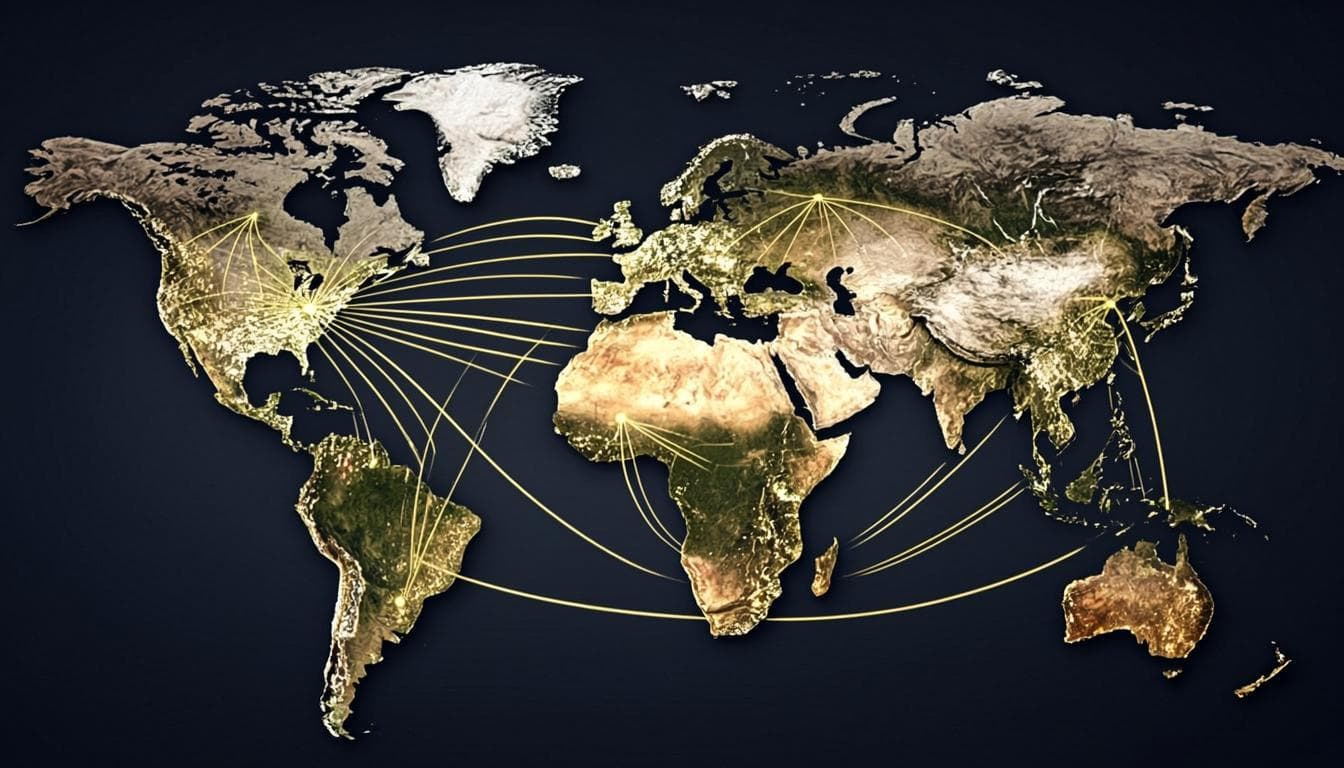
Something consequential is happening in global trade, and it is happening mostly outside the headlines. A dense web of new trade corridors connecting the economies of the Global South is expanding year after year, quietly rebalancing the geometry of world commerce. Container ships now trace arcs between the Gulf, South Asia, Southeast Asia, Africa and Latin America that made little commercial sense a generation ago.
For most of the modern era, global trade meant flows anchored in Europe, North America and East Asia. That architecture is now being complemented — not replaced — by corridors linking the Gulf, South Asia, Southeast Asia, Africa and Latin America directly to one another. The distinction matters: the old arteries still carry the most value, but the fastest growth is in the new ones, and growth is what compounds.
This piece makes the case that these corridors deserve more attention — and tests it against the skeptics'. The argument rests on three converging forces (demography, energy, capital), one physical evidence trail (ports), and a simple observation: the builders are spending their own money, on their own timeline.
Key Takeaways
- South-south trade corridors — linking the Gulf, South Asia, Southeast Asia, Africa and Latin America — are expanding steadily, complementing rather than replacing the north-anchored architecture of world trade.
- The share of trade conducted between emerging economies has climbed steadily over the past two decades, and analysts expect the trend to continue.
- Three forces are converging behind the build-out: demography, cheap energy, and record southern infrastructure capital from sovereign funds and development institutions.
- Real obstacles remain — fragmented arrangements, infrastructure gaps, currency frictions, governance concerns — but the direction of capital and concrete is hard to argue with.
The Numbers Tell the Story
The share of trade conducted between emerging economies has climbed steadily over the past two decades, and analysts expect the trend to continue. Gulf state investment in Indian and Southeast Asian infrastructure, African continental trade arrangements, and Latin American resource flows to Asian industry all point in the same direction.
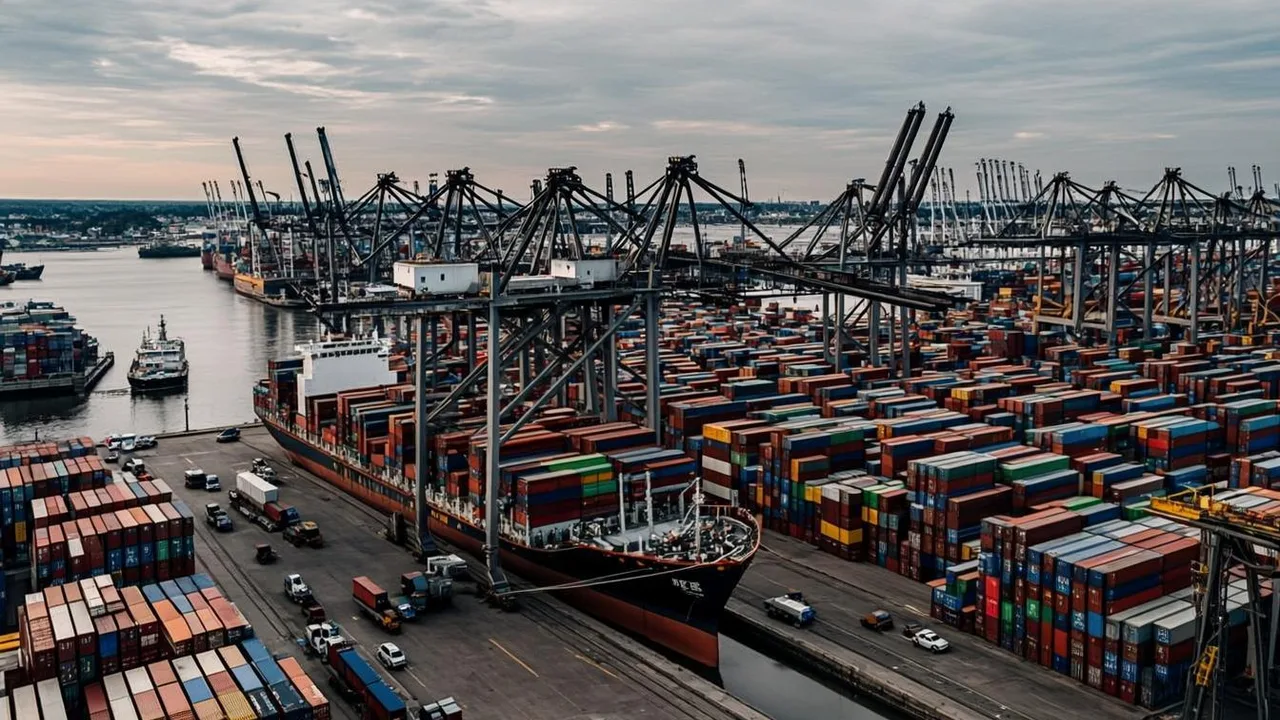
Ports are the clearest physical evidence. Container terminals along the Indian Ocean rim and the Gulf are posting some of the fastest throughput growth in the world, and shipping lines have restructured networks to serve intra-southern routes that were once afterthoughts. Trade analysts describe a self-reinforcing loop: more direct services lower transit times and costs, which makes new routes viable, which attracts transshipment volume, which justifies deeper berths and bigger cranes.
The composition of the flows is changing too. Desks that track commodity routes note growing volumes of refined fuels, petrochemicals and manufactured components moving south-south — not just the raw materials-for-manufactures exchange of the colonial era. Containerization of African and Latin American trade is turning bulk relationships into industrial ones.
Why Now: Three Converging Forces
Three forces are converging. Demography: the working-age populations of South Asia, Africa and the Gulf dwarf those of aging advanced economies. Energy: the world's cheapest new power generation is increasingly located in the Global South. And capital: sovereign funds and development institutions are channeling record sums into southern infrastructure.
Each force amplifies the others. Young populations create demand and labor; cheap power makes industrial locations viable; capital builds the ports and rails that connect them. Analysts note that for the first time in the modern era, the Global South holds the domestic savings, state investment vehicles and industrial base to finance its own integration — the previous generation of corridor dreams foundered on the absence of exactly that.
Politics plays a role too. Multipolar trade relationships give smaller economies leverage and larger ones alternatives — a structural reality that trade corridors make concrete. Trade watchers describe the dynamic as hedging at continental scale: every new direct route is an option that reduces dependence on any single market, created by states with the deepest pockets and longest horizons.
How a Corridor Actually Gets Built
The mechanism deserves scrutiny, because corridors are not declared — they are constructed. The typical sequence starts with an anchor: a deep-water port, usually state-backed, often with an adjacent special economic zone. Rail and road links follow, connecting the anchor to hinterland demand. Trade finance arrives third — currency swap lines, correspondent banking relationships, insurance capacity — because cargo moves only as fast as payment clears. Industrial investment comes last and matters most: anchor tenants that turn a transit route into a production network.
The Gulf model has become the template. State operators take equity positions in foreign ports, pair them with logistics zones, and sign long-term concessions that align incentives across decades rather than election cycles. Market watchers note that these operators compete on service reliability rather than price — a strategy that works only when the sponsor's balance sheet can absorb lean years, which is precisely what sovereign ownership provides.
The Skeptics' Case
There are real obstacles: fragmented regional arrangements, infrastructure gaps, currency frictions and governance concerns. Corridor boosters have promised transformations before, and delivery has not always followed.
The skeptics deserve a fair hearing. Regional trade arrangements in parts of Africa and Latin America overlap and contradict one another, generating compliance costs that small traders cannot absorb. Currency frictions are chronic: dozens of African economies manage exchange rates that complicate settlement, and correspondent banking has thinned in the very corridors that need it most. And the historical record includes corridors announced with fanfare and quietly downgraded when traffic failed to materialize.
Two things keep the argument alive. First, the failure cases were mostly public projects seeking traffic; the current wave builds where traffic already exists and removes friction from it. Second, the financing is different: sovereign funds write equity cheques, not conditional loans, and equity patience tolerates the long gestation that corridors require. Skeptics reply that patience is not a business model — a fair point, and one the next decade will settle.
What It Means for Investors and Companies
For portfolio managers, the implications run through channels that standard north-south models underweight. Logistics operators, port owners, regional banks and telecom carriers along the new corridors earn the tolls of integration. Sovereign credit in corridor hub economies carries a growth story that traditional commodity-cycle analysis misses. And multinationals that treat the Global South as a single "emerging markets" bucket will misprice the differences between corridor economies and bystanders.
The watch items are concrete: throughput statistics at Indian Ocean rim ports, the pace of continental trade-arrangement implementation, and the currency-swap networks that quietly determine settlement. None of these will make headlines; all of them will make the map.
Scenarios for 2026–2027
Three paths frame the outlook. In the continuation scenario, corridors keep compounding at the current pace — unspectacular in any year, transformative over the decade. In the friction scenario, currency stress or governance reversals slow the build-out, and the skeptics' case strengthens. In the acceleration scenario, a major north-south shock — tariff walls, chokepoint disruption — redirects trade volumes southward faster than the infrastructure can absorb them. Analysts regard the first as the base case and note, with some irony, that the third would be read at the time as bad news when it is functionally a demand surge.
FAQ
What exactly is a trade corridor?
A connected system — ports, rail and road links, trade finance and industrial zones — that moves goods between economies. A corridor is not a route on a map but a chain of infrastructure and agreements that lets cargo, payment and information move together.
Are these corridors replacing the old north-south trade system?
No — complementing it. The established arteries between Europe, North America and East Asia still carry the most value. What is changing is the fastest growth: direct south-south links now handle a rising share of new trade, and analysts expect the trend to continue.
What could go wrong?
Fragmented regional arrangements, infrastructure gaps, currency frictions and governance concerns. The historical record includes corridor projects that over-promised and under-delivered. The counterargument: the current wave is financed with equity rather than conditional debt, and it builds where traffic already exists rather than where planners wish it did.
Why should ordinary investors care?
Because company earnings, sovereign credit and supply chains are quietly re-routing. Firms and economies on the new corridors earn the tolls of integration; those mapped only through a north-south lens will find the map redrawn before they notice.
The Bottom Line
The trade corridors of the Global South are the rare structural story that is both underreported and overdelivered. The evidence is not in speeches but in throughput: container terminals posting the fastest growth in the world, shipping lines restructured around intra-southern routes, and record sovereign capital committed with decade-long horizons. The economies building these corridors are doing so with their own money, for their own reasons, on their own timeline.
That does not make the skeptics wrong about the obstacles — fragmented arrangements, currency frictions and governance gaps are real, and some corridors will fail. It makes the skeptics' timing the question. The direction of capital and concrete is hard to argue with; the pace is genuinely uncertain.
Investors and executives who still map the world through a north-south lens may find the map redrawn before they notice. The simplest discipline for 2026–2027 is to watch the ports: throughput data does not spin, and every new berth along the Indian Ocean rim is a sentence in a longer argument.



Comments(0)
Share your thoughts. Comments are moderated and links are not allowed.
No comments yet. Be the first to share your view.
Add a comment