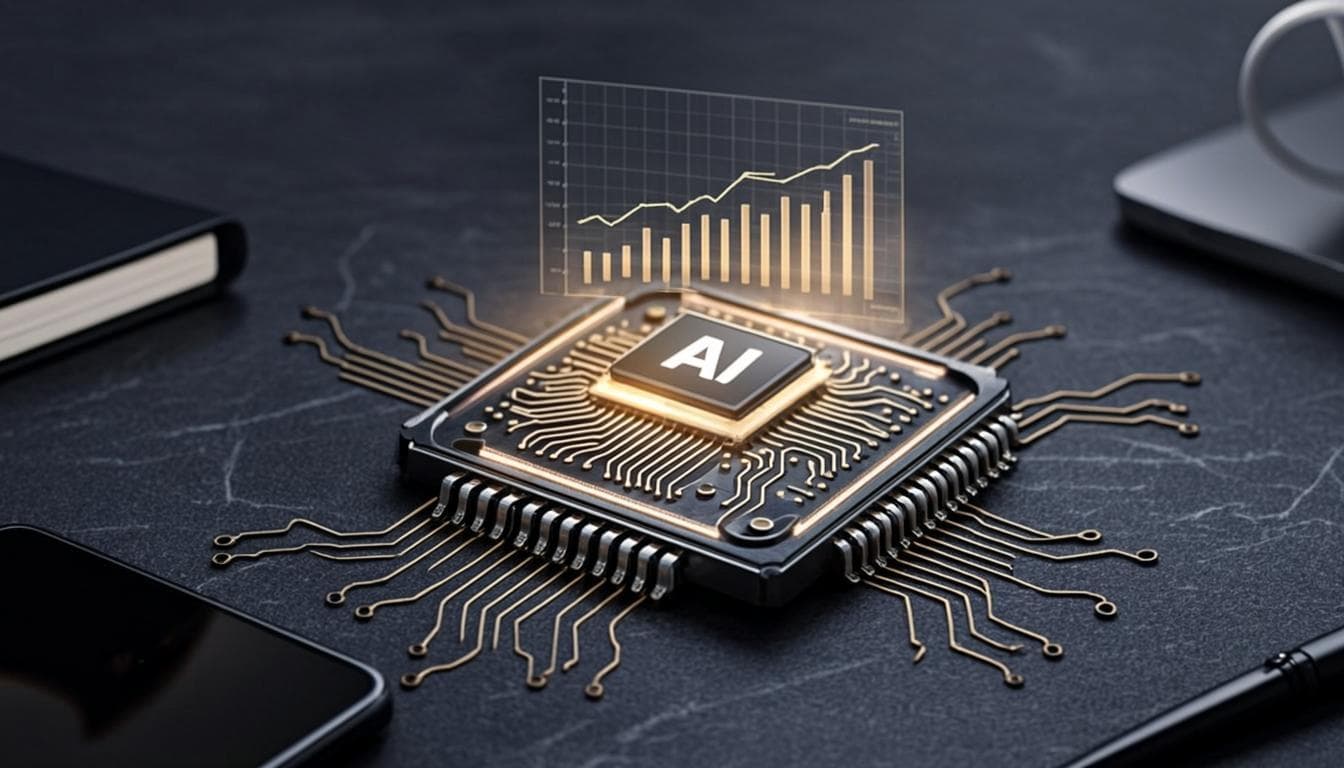
Quantum computing promises to revolutionize industries by solving problems beyond classical computers' reach. But between that promise and today's hardware sits a wide gap — and businesses that fail to measure it accurately risk both missed opportunities and wasted budgets. The technology is advancing rapidly, yet practical applications remain limited, and the timeline to commercial relevance is measured in years, not quarters.
Understanding that timeline is now a strategic task, not a technical curiosity. Boards are asking when quantum will matter; vendors are answering "sooner than you think"; and the honest answer sits somewhere in between. The companies that navigate this well will be those that distinguish genuine milestones from marketing milestones — and that build optionality without betting the roadmap on it.
Key Takeaways
- Today's quantum computers remain research instruments: limited qubits, high error rates and few applications where they outperform classical systems on commercial problems.
- Error correction — not raw qubit counts — is the real gatekeeper for practical quantum advantage; watch logical qubits, not physical ones.
- Finance, pharmaceuticals and logistics are closest to early value, mainly through optimization and simulation experiments run on hybrid quantum-classical systems.
- The sensible corporate posture is a portfolio approach: build literacy, identify candidate problems and pilot cheaply, while keeping classical solutions as the workhorse.
Where the Technology Actually Stands
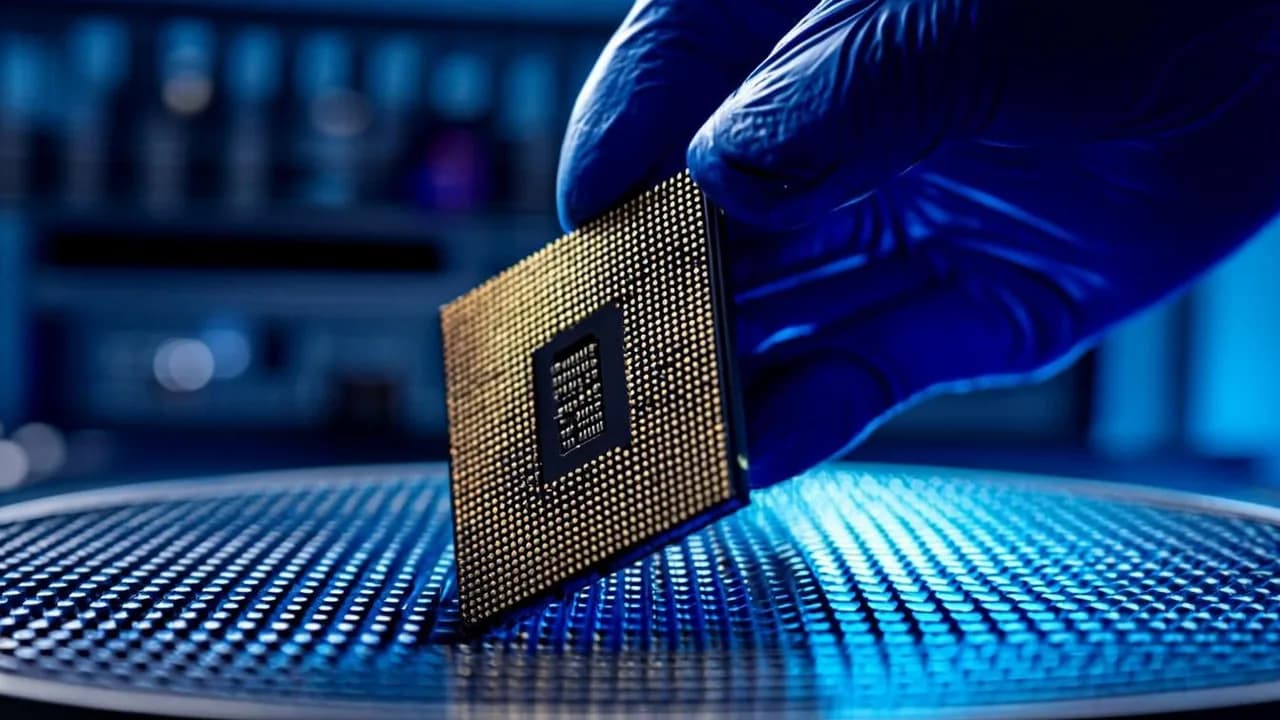
Today's quantum computers exist primarily in research labs and specialized facilities operated by large technology companies, national laboratories and a handful of well-funded startups. They operate with limited qubits and high error rates, making them unsuitable for most commercial workloads. The machines are noisy, delicate and demanding: many require near-absolute-zero cooling, and even short computations must be repeated to average out errors.
None of this means the field is stagnant. Qubit counts have climbed, coherence times have improved, and the tooling around quantum programming has matured from academic curiosities into cloud services that any developer can access. Early adopters in finance and pharmaceuticals are experimenting with quantum algorithms for optimization and simulation problems, but the results remain experimental — proofs of concept that inform strategy rather than production systems that move money or molecules.
The current value for most organizations lies less in deployment than in understanding: learning what classes of problems quantum computers might eventually address, and what that could mean for competitive position in five or ten years.
Why Error Correction Sets the Timeline
The single most important technical concept for a business audience is the difference between a physical qubit and a logical one. Physical qubits are the raw hardware units, and they are fragile: stray heat, electromagnetic noise and even cosmic rays can corrupt a computation within fractions of a second. Logical qubits are the error-corrected constructs built from many physical qubits working together, and they are what practical applications will eventually require.
The arithmetic is sobering. Error-correction schemes generally demand large numbers of physical qubits for each reliable logical qubit, which is why headline qubit counts can overstate progress. A machine with thousands of physical qubits may still compute very little if error rates remain high. Conversely, demonstrations of increasingly reliable logical qubits — even in small numbers — matter more commercially than splashy hardware announcements.
This is also why hybrid quantum-classical approaches attract so much attention. By assigning the quantum processor only the portion of a problem where it might help, and letting classical machines do the rest, researchers extract near-term value from imperfect hardware. Analysts view hybrid architectures as the bridge that will carry enterprises from today's experiments to whatever fault-tolerant future eventually arrives.
Reading the Hype Cycle Without Getting Whiplash
Quantum computing has entered the peak of inflated expectations familiar from technology adoption cycles. Media coverage often overstates near-term capabilities, while vendor marketing emphasizes future potential in the present tense. For business leaders trying to assess when investments will yield returns, the resulting signal is noisy — and the noise is costly, because premature commitments consume both budget and credibility.
A few disciplines help. First, separate milestone types: hardware scaling, algorithmic breakthroughs and commercial deployments are different things, and progress in one does not guarantee the others. Second, watch for replication: results demonstrated on one platform, by one team, under controlled conditions, are signals rather than proof. Third, distinguish "quantum-inspired" — classical algorithms borrowing quantum techniques — from genuine quantum execution; vendors sometimes blur the line.
Recognizing the hype pattern does not mean dismissing the technology. Analysts who lived through the AI winters and the AI boom note the same structural dynamic: long periods of quiet progress punctuated by sudden capability jumps. The strategic error, in both directions, is treating the timeline as settled.
The Industries Closest to Payoff
A few sectors stand to benefit from quantum computing earlier than others, and the pattern tracks where the underlying mathematics hurts most today.
The financial industry is exploring quantum approaches for portfolio optimization and risk modeling — problems where the number of possible combinations grows explosively with each added variable. Banks and asset managers are also ahead of most industries on a less glamorous motivation: quantum computers' future ability to break today's encryption makes post-quantum cryptography a present-day compliance project, not a future one.
Pharmaceutical companies are investigating quantum simulation for molecular modeling, potentially accelerating drug discovery by representing molecular interactions more naturally than classical computers can. Logistics and supply-chain operators, meanwhile, are watching complex optimization — routing, scheduling, network design — where even incremental improvements compound across thousands of daily decisions.
The common thread is that these industries should be developing quantum literacy now: training specialists, cataloguing candidate problems and participating in pilot programs, so that when hardware matures they can move quickly rather than start from zero.
A Practical Playbook for Readiness — and Pressure-Testing Vendors
Businesses should adopt a measured approach to quantum readiness. Start by building internal knowledge through training and small pilot projects; identify problems in the organization that might eventually benefit from quantum solutions; and establish relationships with quantum providers and research institutions. Most importantly, maintain a portfolio approach that balances quantum exploration against proven classical computing, which continues to improve on its own formidable trajectory.
Vendor claims deserve particular skepticism — not because providers are dishonest, but because they are selling a future. Ask for evidence of real-world results, not demonstrations tuned to favorable benchmarks. Favor vendors who acknowledge current limitations while showing a credible roadmap, and be wary of solutions that claim quantum advantage without independent validation or that require heavy hardware investment for minimal benefit. A useful heuristic: the more confidently a vendor compresses the fault-tolerance timeline, the more evidence you should demand.
What to Watch in 2026–2027
The quantum landscape will evolve quickly, but a few indicators matter more than the noise. Monitor progress in qubit stability and error correction — especially demonstrations of logical qubits with improving error rates — because those metrics gate every commercial application. Pay attention to hybrid quantum-classical services, which offer the most plausible near-term value. Track emerging standards for benchmarking and for post-quantum cryptography, both of which will shape corporate obligations. And keep reassessing quantum computing's relevance to your specific business challenges as the technology matures, adjusting the strategy — and the budget — as evidence accumulates.
FAQ
When will quantum computers be useful for business?
Honest timelines vary by use case. Hybrid quantum-classical experiments are already running in finance, pharma and logistics, but broad commercial advantage is generally viewed as a years-away prospect tied to progress on error correction. Planning horizons of five to ten years are common among analysts.
What is the difference between a physical and a logical qubit?
A physical qubit is a raw, error-prone hardware unit. A logical qubit is an error-corrected construct built from many physical qubits. Commercial applications need logical qubits, which is why headline physical-qubit counts can overstate how much a machine can actually compute.
Should companies invest in quantum computing now?
Most should invest a little, deliberately: literacy, problem identification, pilots and partnerships rather than hardware. The portfolio approach — exploring quantum while relying on classical systems — keeps optionality open at controlled cost.
Is quantum computing a security threat today?
Not yet an operational one, but the risk is being planned for now. Future quantum computers could break widely used encryption, so organizations are already migrating toward post-quantum cryptography — a process standards bodies and security agencies have urged starting well before hardware arrives.
The Bottom Line
Quantum computing is real, advancing and still far from most commercial workloads — all three statements are true at once. The businesses that will benefit first are not necessarily those that spend the most, but those that learn the fastest: building literacy, cataloguing genuinely relevant problems and staying close enough to the research frontier to know when the calculus changes.
The discipline to resist hype is as valuable as the appetite to explore. Companies should demand evidence, prefer partners who are candid about limitations, and treat quantum as one lane in a broader computing strategy rather than a shortcut that leapfrogs the hard work of data, talent and process. The timeline to fault tolerance remains uncertain; the cost of being either complacent or credulous is not. For now, measured preparation — not premature transformation — is the strategy most observers endorse.



Comments(0)
Share your thoughts. Comments are moderated and links are not allowed.
No comments yet. Be the first to share your view.
Add a comment