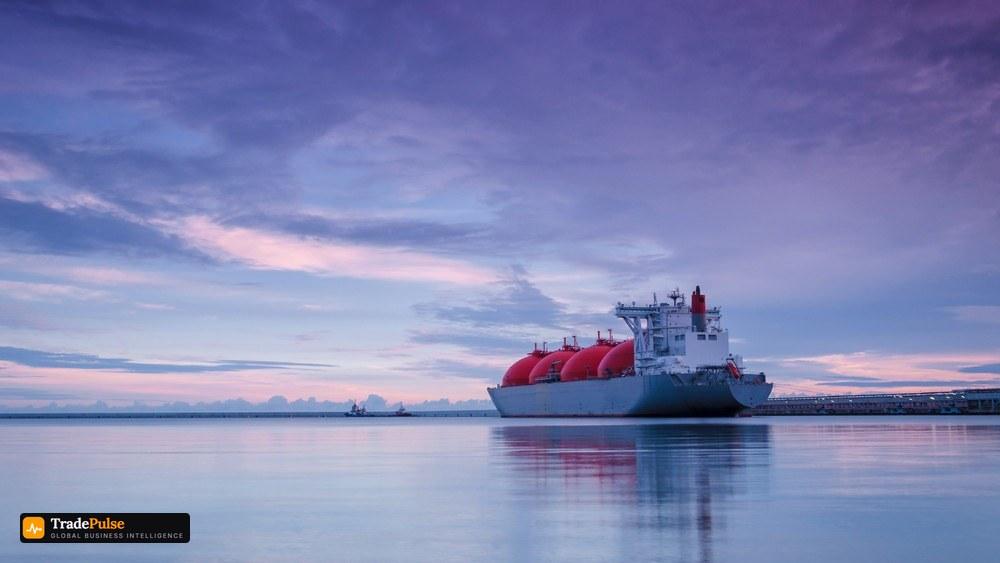
According to TradePulse, global LNG markets are facing a winter of extreme uncertainty as prices hover above $30 per MMBtu with significantly lower gas inventories in key markets. While further price rallies are possible, potent downside risks remain, including potential recovery of Middle Eastern LNG supply and weather-suppressed demand.
The defining feature of the Northern Hemisphere winter 2026/27 is uncertainty. Liquefied natural gas (LNG) prices are above $30 per million British thermal units (MMBtu), and gas inventories are markedly lower in key markets. Further price rallies are not a foregone conclusion, though. Potent downside risks remain, including a recovery of Middle Eastern LNG supply and weather-suppressed power and heating demand.
Europe: Paying to keep the arbitrage closed
Europe enters winter with the lowest gas inventory of the 2020s, just as the lack of Middle Eastern LNG in the Pacific basin intensifies competition for US cargoes. The continent will have to pay dearly to keep inter-basin arbitrage closed and hope for a mild winter to limit demand organically.
Northeast Asia: Mild weather, weak incentives to burn gas
Northeast Asia likely faces a mild winter, weighing on heating and power demand. LNG at $30 per MMBtu or more disincentivizes gas use and boosts coal burn, while improved nuclear availability further dampens gas demand in Japan and South Korea.
US: Insulated from the global rally
After hovering near $3 per MMBtu all summer, Henry Hub is expected to peak around $4 this winter. Strong production and healthy inventory going into the season keep prices subdued while highly utilized liquefaction capacity isolates the US market from the global rally.
Two bodies of water
Warm surface water in the central and eastern equatorial Pacific, known as El Niño, will shape weather patterns worldwide. It is expected to weigh on overall gas demand, but it offers no guarantee against cold spells and can lift regional demand due to droughts. Colombia and Brazil are the clearest X-factors, as El Niño jeopardizes their hydro-reliant power generation.
The Strait of Hormuz, the outlet for LNG from Qatar and the UAE, has been targeted repeatedly in the Middle East conflict. Transits stabilized in October, potentially allowing an LNG supply recovery by 2Q27, but output is always one escalation away from cratering again. Egypt is projected to have spare regasification capacity this winter and may need it if escalation forces another shutdown of Israeli pipe flows.
What to watch
The upside risks are a cold snap in low-storage Europe, an El Niño-driven drought in Latin America, or renewed disruption in the Gulf. The downside risks are the return of Middle Eastern LNG and mild winters in Europe and Asia. Market participants should plan for a wide range of outcomes rather than a single base case.
By Rystad Energy
Source: rss.app

Comments(0)
Share your thoughts. Comments are moderated and links are not allowed.
No comments yet. Be the first to share your view.
Add a comment