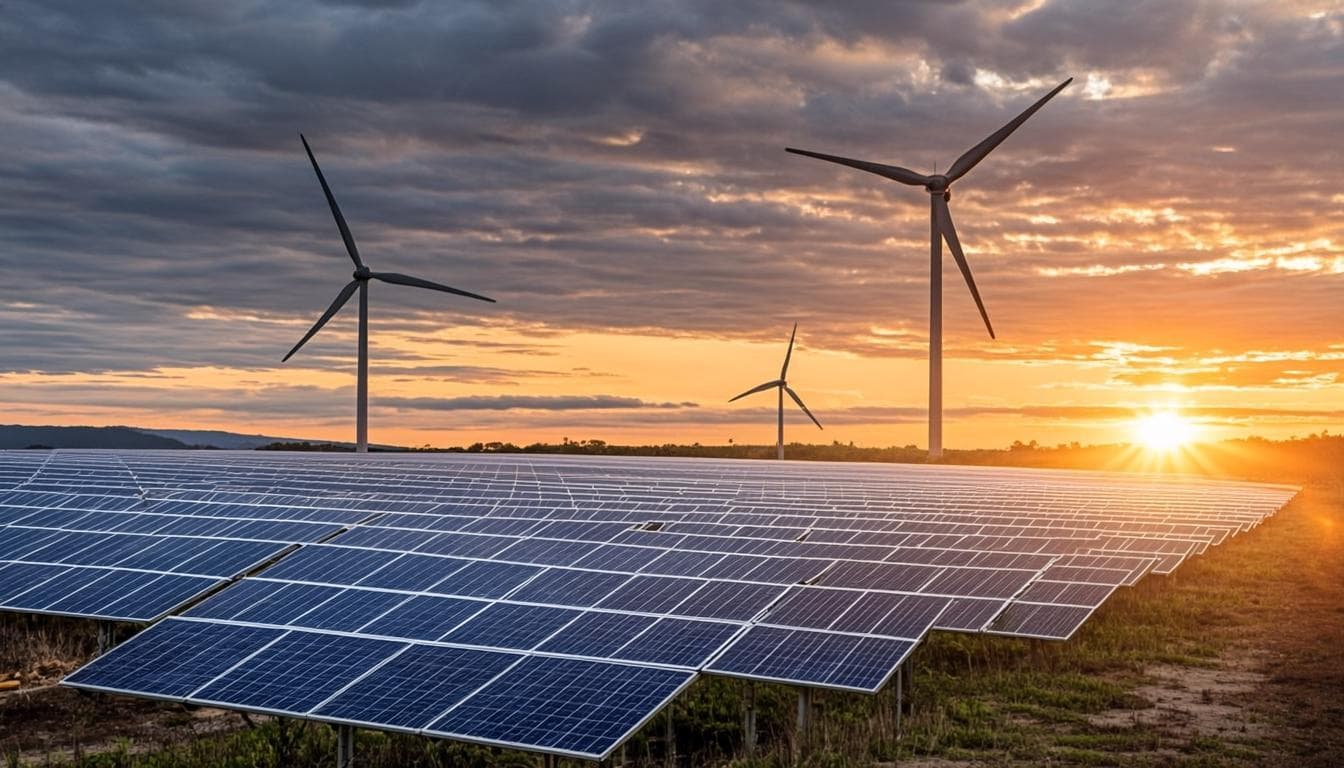
For all the attention commanded by solar panels and wind turbines, the defining infrastructure question of the energy transition is quieter, boxier, and increasingly bankable: where do you put electricity when the sun is blazing and the wind is howling, so it is still there at dinner time? Grid-scale batteries — acres of containerized lithium-ion cells wired into the transmission network — have gone from technical curiosity to core infrastructure in under a decade; in 2026, utilities treat storage less as an accessory than as the grid's load-bearing wall.
The shift is visible in every major power market. Batteries now routinely clear capacity auctions, capture the evening price spikes that once belonged to gas peakers, and supply the split-second balancing services fossil plants used to monopolize. What was a subsidy-dependent experiment five years ago is now a merchant business — with real financing, real competition, and, in the most mature markets, real revenue compression.
The stakes reach beyond energy. Every megawatt of storage makes renewable generation more dependable, and every improvement in storage economics makes deeper decarbonization easier to finance. Batteries are the missing link of the transition — but how that link is being forged, and where it remains too short, is more complicated than headline growth rates suggest.
Key Takeaways
- Grid-scale batteries have crossed from subsidy-supported pilots to merchant infrastructure competing for capacity, arbitrage, and ancillary-services revenue across major power markets.
- Falling cell costs, driven overwhelmingly by electric-vehicle manufacturing scale, have pushed project economics past the threshold where standalone storage can pencil without direct subsidies in favorable markets.
- The sector's defining limitation remains duration: most installed systems deliver about four hours of output, not enough to carry grids through multi-day lulls in wind and sun.
- For 2026–2027, watch four variables: interconnection backlogs, tariff pressures on imported cells, revenue cannibalization in saturated markets, and hyperscale data-center demand for firm clean power.
How Grid Batteries Actually Earn Their Keep
The commercial logic rests on a simple asymmetry: electricity is priced minute by minute, but batteries can move it across time. The most transparent strategy is energy arbitrage — charge when wholesale prices sag, typically midday when solar floods the market, and discharge into the evening ramp, when prices spike as solar fades and demand peaks. In high-renewable markets this daily spread has widened dramatically, and trading desks report that batteries have become the primary instrument for monetizing it.
Arbitrage, however, is only the most visible revenue line. Batteries also excel at services that reward speed rather than duration. Frequency regulation — matching supply and demand on second-to-second timescales — was the first arena where storage outcompeted thermal plants, because a battery responds in milliseconds rather than minutes. Voltage support, spinning reserve, and black-start capability round out the menu. Because one asset can stack several streams at once, sophisticated operators dispatch across multiple markets simultaneously. A grid battery is not one business but a portfolio of grid services managed in real time — and the optimizer's skill now matters as much as the cell's chemistry.
From Curiosity to Core Asset in Under a Decade
A decade ago, grid storage meant pumped hydro — which still dominates global capacity by energy stored — plus a scattering of demonstration projects. Lithium-ion changed that, but not because anyone designed it for the grid. The technology was dragged down the cost curve by consumer electronics and then by electric-vehicle manufacturing at planetary scale; grid developers inherited the cheap, mass-produced cells and added power electronics, fire suppression, and software.
Early deployments clustered in markets that paid handsomely for speed: frequency-regulation contracts and capacity payments for dependable peak resources. As installed capacity grew, batteries graduated from seconds-to-minutes services to shifting bulk energy across the day. The geography confirms it: regions combining high renewables with volatile prices — California, Texas, Australia, parts of Europe — adopted earliest and largest. Where price spreads are flat, storage still struggles. Batteries do not create the business case; volatile, renewable-heavy grids do.
The Economics Have Crossed a Threshold — and Now Face a Test
The original analysis noted that costs per megawatt-hour have fallen to the point where projects are increasingly viable without subsidies, and that assessment has only strengthened. Carbon pricing in many regions raises the effective cost of gas-fired alternatives. Financiers, once wary of merchant exposure, have developed tolling agreements and hedging products that make battery cashflows look like conventional infrastructure rather than a prop-trading book.
But maturity cuts both ways. In the most advanced markets, analysts flag a familiar pattern: as more storage chases the same evening price spikes, those spikes flatten, and per-megawatt revenues decline. Cannibalization of the arbitrage spread is the storage industry's version of solar's self-deflation — a mark of success that nonetheless disciplines returns. Developers respond by refining dispatch strategies, pursuing new ancillary products, and co-locating batteries with solar, where a shared interconnection lowers costs for both.
Then there is the supply chain. Cell manufacturing remains heavily concentrated in Asia, and trade policy — including tariffs on imported batteries and materials — has become a genuine swing factor for project costs in Western markets. Localization efforts are underway on several continents, but market watchers note that a competitive domestic supply base takes years, not quarters.
The Four-Hour Problem
The sector's deepest limitation is duration. The de facto industry standard — a four-hour system — was not chosen because four hours solves the grid's problem; it was chosen because it maximizes revenue per dollar under current market rules. The hardest hours are not the daily evening ramp, which four-hour batteries handle well, but the multi-day lulls — winter stretches when wind stalls, sun is scarce, and heating demand peaks simultaneously.
That is the opening for longer-duration alternatives: flow batteries, which store energy in external tanks and scale duration cheaply; iron-air chemistries aiming for multi-day discharge at a fraction of lithium-ion's cost; sodium-ion cells that sidestep lithium supply constraints; and thermal or mechanical systems that convert surplus electricity into heat, cold, or compressed air. None has matched lithium-ion's manufacturing flywheel, and analysts caution against assuming a single winner. The likelier outcome is a layered stack — lithium-ion for the daily cycle, longer-duration technologies behind it — with hybrid solar-plus-storage projects squeezing more from scarce interconnection rights.
Who Wins, Who Waits
The storage boom redistributes value across the power sector. Utilities gain a tool to defer expensive network upgrades and meet peak demand with fewer fossil peakers. Independent developers and their optimization desks capture merchant upside — and absorb merchant risk. Consumers benefit indirectly — storage flattens price spikes and reduces curtailment waste — though the pass-through to retail bills depends on market design. Grid operators inherit a flexible new resource and a thorny question: how to plan a network in which gigawatts of storage can appear faster than traditional cycles can accommodate. Two constraints temper the enthusiasm: interconnection queues remain clogged, and the second-life EV battery pool, though growing, has been held back by testing, certification, and warranty complications.
Scenarios for 2026–2027
The base case sketched by most market watchers: continued rapid deployment alongside revenue discipline — batteries keep winning capacity and flexibility auctions, but returns in saturated markets compress, rewarding superior optimization and pushing developers toward new regions and stacked business models.
The upside scenario runs through electricity demand itself. The surge in data-center and AI-driven load has made firm clean power scarce, and hyperscalers are increasingly signing offtake agreements that include storage. If that procurement wave accelerates, it could pull storage buildout forward faster than the merchant market ever could. The downside is equally concrete: tariff escalation raises cell costs, interconnection backlogs persist, and cannibalized revenues chill financing for marginal projects. None of these scenarios halts the transition; they change its speed and redistribute its winners.
FAQ
Why are most grid batteries only four hours long?
Four hours maximizes revenue under most current market rules, which pay mainly for shaving the daily evening peak. Adding duration raises cost per megawatt while earning little extra today; as capacity accreditation evolves to value multi-day reliability, longer systems become financeable.
Are grid-scale batteries safe?
Incidents are rare but consequential, shaping permitting and community relations. Modern systems layer battery-management software, thermal detection, physical spacing, and fire suppression, and standards continue to tighten. Developers now treat safety performance as a bankability issue, not merely a compliance one.
Does storage actually lower emissions?
It depends on what the battery charges from. Shifting surplus solar into the evening displaces gas peakers and reduces curtailment — a clear win. Where batteries charge from fossil-heavy power, the math is murkier. The cleaner the grid, the cleaner the storage.
The Bottom Line
Grid-scale batteries have already changed what a power system can be. They have turned volatility from a liability into a revenue stream, made evening peaks manageable without dedicated fossil peakers, and converted renewable curtailment from waste into inventory. The technology no longer needs defending on principle; the debate has moved on to returns, duration, and supply chains.
The next two years will test that maturity. If deployment continues at pace while longer-duration technologies and new demand sources come online, storage stops being the missing link and becomes the grid's connective tissue. If tariffs, interconnection delays, and revenue compression bite, the buildout slows — but the destination is not in doubt, only the schedule.




Comments(0)
Share your thoughts. Comments are moderated and links are not allowed.
No comments yet. Be the first to share your view.
Add a comment