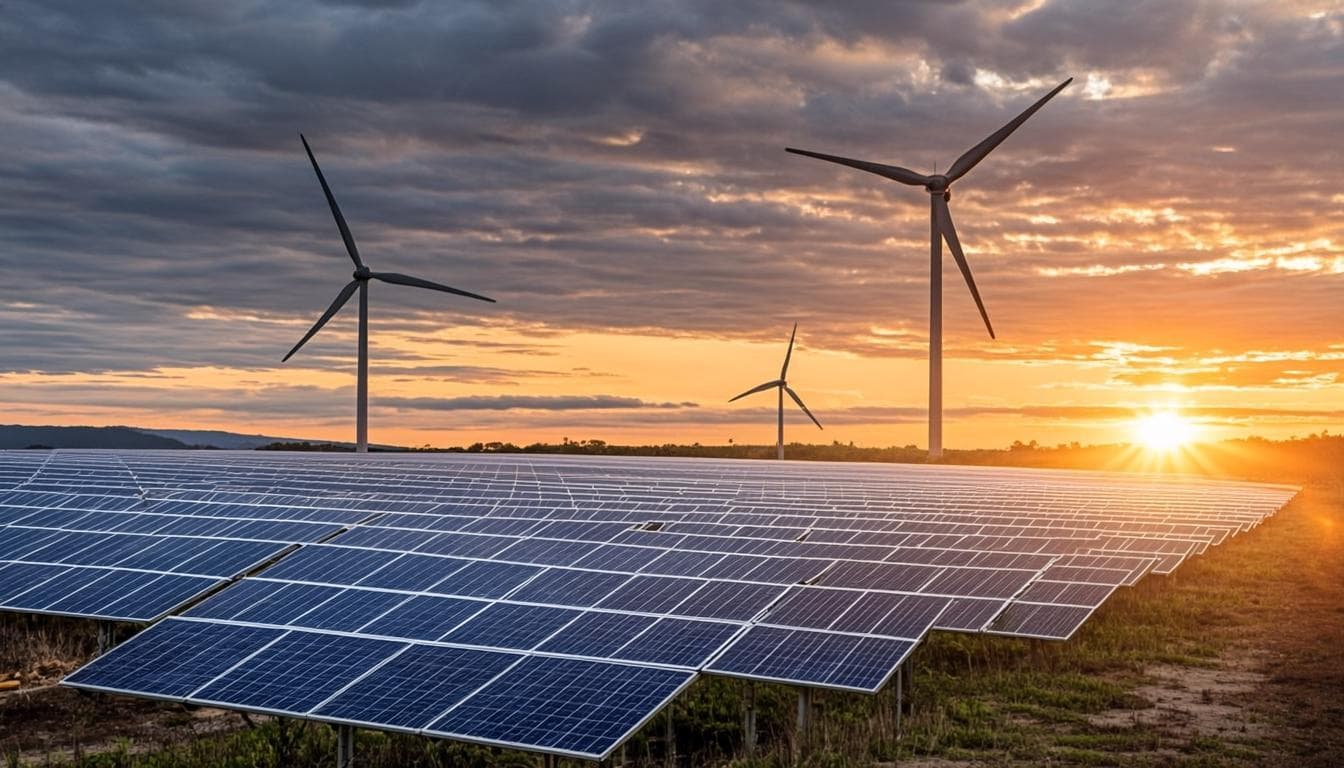
The brochure version of the green hydrogen story is seductively simple: excess solar and wind power runs through an electrolyzer, water splits into hydrogen and oxygen, and the resulting fuel powers steel mills, ships, and fertilizer plants with zero emissions. The engineering version involves capacity factors, embrittlement, compressor stations, leakage rates, and offtake agreements that take years to negotiate. Both versions are true. Only one of them is easy to fund.
Green hydrogen has emerged as a cornerstone of the global energy transition, promising a clean fuel alternative for hard-to-abate sectors that electricity cannot easily reach. Yet beneath the optimistic projections lies a complex reality of technological limitations, economic hurdles, and infrastructure gaps. The journey from promising concept to commercially viable solution is more challenging than many current narratives suggest — and understanding exactly where the friction sits is essential for anyone allocating capital to, or writing policy for, the hydrogen economy.
Key Takeaways
- Green hydrogen costs several times more than the fossil-based hydrogen most industries use today, and remains dependent on subsidies or carbon pricing to close the gap.
- Electrolyzers are still at the demonstration-to-early-commercial stage; scaling to the gigawatt levels needed for meaningful decarbonization requires improvements in cost, durability, and efficiency.
- Securing cheap, steady renewable power is the single biggest driver of production cost — and the hardest contract to sign.
- Hydrogen's physical properties make it expensive to move and store, so early projects will cluster where production and demand sit close together: ammonia plants, refineries, and steel hubs.
The Economic Equation
Hydrogen is not a new industry — the world already consumes enormous quantities, mostly produced from natural gas or coal, in fertilizer and chemical production and oil refining. That legacy matters, because it sets the price benchmark. Green hydrogen, made by electrolysis powered by renewable electricity, must compete against hydrogen the market already knows how to make cheaply. Despite significant cost reductions in renewables, green production generally remains several times more expensive than fossil-based routes, with the levelized cost varying widely by region.
The cost stack has three layers: the electrolyzer itself, a substantial capital expenditure that has fallen but remains high; the electricity to run it, which typically dominates lifetime costs; and the balance of plant — compressors, water treatment, power electronics — that desks report is chronically underestimated in early-stage models. Without substantial subsidies or carbon pricing that internalizes the environmental costs of fossil fuels, most analysts see green hydrogen struggling to compete on price alone this decade. The policy question is therefore not whether support is needed, but which support design produces real projects rather than announced ones.
The Physics Problem Nobody Can Lobby Away
Hydrogen is the lightest element in the universe, and it behaves like it. Per unit of volume it carries very little energy, which means it must be compressed to high pressures, chilled into a liquid at cryogenic temperatures, or converted into a carrier such as ammonia before it can be moved economically. Each option adds cost, energy losses, and engineering complexity.
The molecule also leaks easily and embrittles the steel used in pipes and vessels, demanding specialized materials and careful handling. None of this is disqualifying — industry has handled hydrogen safely for decades — but the infrastructure layer of the hydrogen economy is more expensive than casual comparisons with natural gas suggest. Analysts caution that repurposing the existing gas network, while genuinely promising, involves far more than a change of fuel: seals, compressors, meters, and end-use equipment all require adaptation.
The Power Purchase Puzzle
The dominant input cost is electricity, and it creates the sector's most awkward commercial problem. Electrolyzers are capital-intensive assets that earn their keep by running constantly on the cheapest possible power. But the cheapest renewable power — the surpluses that occasionally drive spot prices toward zero — is intermittent by definition. Running an electrolyzer only when power is cheap yields a low capacity factor, spreading capital costs over few hours of output and destroying the economics. Running around the clock requires firm power at higher prices, inflating operating costs.
Proposed projects therefore chase long-term power purchase agreements that square this circle: renewable supply at prices low enough to keep hydrogen competitive. Many projects stall precisely there. Market watchers note that the projects advancing fastest sit in regions with outstanding renewable resources and governments willing to underwrite the gap between aspiration and contract.
The Chicken-and-Egg Problem of First Customers
The hydrogen industry faces a classic sequencing problem: producers need offtake agreements to secure financing, while customers need assurance of stable supply and reasonable pricing before committing to switch. Each side is rational to wait for the other, and both know it.
The most credible first markets are the industries that already use hydrogen. Ammonia production for fertilizer is the clearest case — the infrastructure, handling expertise, and demand all exist, and replacing fossil-based feedstock requires no change downstream. Steelmaking is the other prime candidate: hydrogen can replace metallurgical coal in direct reduction processes, and mills face decarbonization pressure with few alternatives. Refineries offer a third path. Analysts note, however, that these sectors absorb only a fraction of the demand implied by national hydrogen strategies, and each has margin constraints — a green premium buyers will not pay stalls a project as effectively as an engineering fault.
Infrastructure: The Most Underestimated Line Item
Transporting and storing hydrogen at scale requires pipelines, storage facilities, and potentially conversion terminals for ammonia or other carriers — infrastructure that barely exists outside industrial clusters. Salt caverns offer proven bulk storage in geologically favored regions; elsewhere the options are expensive. Long-distance trade, the vision behind many export strategies, adds conversion steps at each end and ships energy at a fraction of oil's density — a punishing economic handicap, as market watchers describe it.
This is why near-term green hydrogen looks clustered rather than continental: production next to consumption, inside industrial ports and refining complexes where hydrogen already flows through dedicated pipes. Networks will grow outward from those nodes as volume justifies them.
A Phased Path to 2027
The sector will likely evolve in phases. Through 2026–2027, expect deployment where renewables are favorable, policies supportive, and industrial demand real — the Gulf, Australia, Chile, Iberia, and northern Europe are frequently cited. Government support through funding, regulation, and procurement will bridge the economic gap, and first-of-a-kind projects will absorb painful lessons about availability and cost overruns.
The honest scenarios diverge after that. In the optimistic case, electrolyzer costs fall along manufacturing curves, carbon pricing strengthens, and the 2030s bring genuine scale. In the pessimistic case, projects fail to reach final investment decisions, subsidies phase out before costs fall, and hydrogen retreats to niches. Reality will land in between, unevenly. The cost trajectory of green hydrogen — not the announcements — will determine its role in the global energy mix.
FAQ
Why is green hydrogen so much more expensive than regular hydrogen?
Because of how it is made. Conventional hydrogen comes from natural gas via a mature, optimized process with cheap feedstock. Green hydrogen uses electricity as its feedstock, and even with cheap renewables, powering an electrolyzer is costly. Add the electrolyzer's capital cost and the balance of plant, and the levelized cost lands several times higher — a gap policy must currently close.
Which industries will use green hydrogen first?
The ones already using hydrogen today: ammonia and fertilizer production, oil refining, and methanol and chemical processing. Steelmaking is the most important new demand candidate. These sectors have handling infrastructure and clear decarbonization pressure, making them the natural first customers before hydrogen expands into shipping, aviation fuels, or long-duration storage.
Can existing natural gas pipelines carry hydrogen?
Partially, and only with modification. Blending limited shares of hydrogen into gas networks is technically feasible today. Full conversion is harder: hydrogen embrittles steel, leaks more readily, and carries less energy per unit of volume, so compressors, seals, and end-use equipment need adaptation. Repurposing is promising for selected corridors but is not a free infrastructure shortcut.
Is green hydrogen still worth pursuing given the challenges?
For specific uses, most analysts say yes. Sectors like steel, ammonia, and long-haul shipping have few alternative routes to deep decarbonization, and electricity cannot directly replace fossil inputs there. The critique is aimed less at hydrogen itself than at overbroad visions of a hydrogen economy spanning every sector; most experts now endorse prioritizing the applications where hydrogen is genuinely indispensable.
The Bottom Line
The gap between hydrogen hype and hydrogen engineering is real but specific: it lives in the cost of electrolysers, the price of firm renewable power, the physics of moving a light and elusive molecule, and the difficulty of sequencing first customers. None of these problems is mysterious, and none is unsolved in principle — they are expensive and slow, which is a different thing from impossible.
For the transition to succeed, honesty is the operative discipline. Governments that fund projects with credible offtake, developers who model capacity factors conservatively, and investors who distinguish announcements from final investment decisions will do better than those who repeat the brochure version of the story. The most successful players in green hydrogen will be those who acknowledge current limitations while positioning deliberately for the phase change — because the sectors hydrogen must serve have no other clean path, and that, in the end, is what keeps the engineering reality worth funding.



Comments(0)
Share your thoughts. Comments are moderated and links are not allowed.
No comments yet. Be the first to share your view.
Add a comment